


Page 70 - AIH-2-3
P. 70
Artificial Intelligence in Health                                        CNN model for leukemia diagnosis


            Tversky  loss  function.  This  approach  enables  the  model   acute leukemia and chronic leukemia. Acute leukemia is
            to  differentiate  between  normal  and  abnormal  cells  as   further split into acute myeloid leukemia (AML) and acute
            well  as  subclassify  various  leukemia  types  with  high   lymphoblastic leukemia (ALL). AML has several subtypes,
            precision. Second, our proposed methodology specifically   including M0 (undifferentiated AML), M1 (AML without
            addresses the challenge of imbalanced datasets, a common   maturation), M2 (AML with maturation), M3 (acute
            issue in medical imaging, by employing the Tversky loss   promyelocytic leukemia), M4 (acute myelomonocytic
            function to improve classification performance. Finally,   leukemia), M5 (acute monocytic leukemia), M6
            we rigorously evaluate the model using publicly available   (erythroleukemia), and M7 (acute megakaryoblastic
            leukemia datasets, demonstrating its superior performance   leukemia). Similarly, ALL is divided into B-cell ALL and
            in terms of accuracy, precision, and recall when compared   T-cell ALL.
            to traditional methods and other DL models.          On the other hand, chronic leukemia is broken down
              In  this  study,  we  utilized  publicly  available  leukemia   into chronic lymphocytic leukemia (CLL) and chronic
            datasets to train and evaluate our DL models. We assessed   myeloid leukemia (CML). CLL is associated with small
            the performance of these models in terms of accuracy,   lymphocytic lymphoma (SLL), while CML is presented
            sensitivity,  specificity,  and  computational  efficiency.  The   with phases of disease progression such as the chronic
            results of this study demonstrated the potential of multilevel   phase, accelerated phase, and blast crisis phase. This
            image classification using DL to significantly improve the   diagram visually organizes leukemia subtypes, showing
            diagnostic process for leukemia, paving the way for more   how they fit into the broader categories of acute and
            accurate and timely interventions in clinical practice.  chronic leukemias.
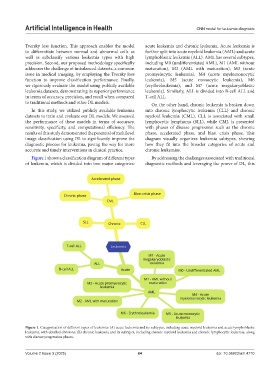
              Figure 1 shows a classification diagram of different types   By addressing the challenges associated with traditional
            of leukemia, which is divided into two major categories:   diagnostic methods and leveraging the power of DL, this


            Figure 1. Categorization of different types of leukemia: (A) acute leukemia and its subtypes, including acute myeloid leukemia and acute lymphoblastic
            leukemia, with detailed divisions; (B) chronic leukemia and its subtypes, including chronic myeloid leukemia and chronic lymphocytic leukemia, along
            with disease progression phases.


            Volume 2 Issue 3 (2025)                         64                               doi: 10.36922/aih.4710

