


Page 138 - AIH-2-4
P. 138
Artificial Intelligence in Health                                 Artificial intelligence app for EVD navigation


                         A                  B                           C             D


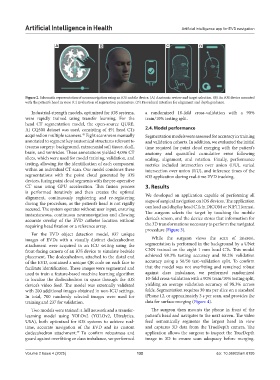
            Figure 2. Schematic representation of neuronavigation using an iOS mobile device. (A) Anatomic review and target selection. (B) An iOS device mounted
            with the patient’s head in view. (C) Evaluation of registration parameters. (D) Procedural interface for alignment and depth guidance.

              Industrial-strength models, optimized for iOS systems,   a  randomized  10-fold  cross-validation with a  90%
            were rapidly trained using transfer learning. For the   train/10% testing split.
            head CT segmentation model, the open-source QURE.
            AI CQ500 dataset was used, consisting of 491 head CTs   2.4. Model performance
            acquired on multiple scanners.  Eight scans were manually   Segmentation models were assessed for accuracy in training
                                    45
            annotated to segment key anatomical structures relevant to   and validation cohorts. In addition, we evaluated the initial
            trauma surgery: background, extracranial soft tissue, skull,   time required for point cloud merging with the patient’s
            brain, and ventricles. These annotations yielded 4,096 CT   anatomy and quantified cumulative error following
            slices, which were used for model training, validation, and   scaling, alignment, and rotation. Finally, performance
            testing, allowing for the identification of each component   metrics included intersection over union (I/U), varied
            within an individual CT scan. Our model combines these   intersection over union (I/U), and inference times of the
            segmentations with the point cloud generated by iOS   iOS application during real-time EVD tracking.
            devices, fusing point cloud segments with the pre-operative
            CT scan using GPU acceleration. This fusion process   3. Results
            is performed iteratively and then creates the optimal
            alignment, continuously registering and re-registering   We developed an application capable of performing all
                                                               steps of surgical navigation on iOS devices. The application
            during the procedure, as the patient’s head is not rigidly
            secured. The system operates without user input, ensuring   can load and display head CTs in DICOM or NIFTI format.
            instantaneous, continuous neuronavigation and allowing   The surgeon selects the target by touching the mobile
            accurate overlay of the EVD catheter location without   device’s screen, and the device stores that information for
            requiring head fixation or a reference array.      the 3D transformations necessary to perform the navigated
                                                               procedure (Figure 3).
              For the EVD object detection model, 937 unique
            images of EVDs with a visually distinct dodecahedron   While  the  surgeon  views  the  scan  of  interest,
            attachment were acquired in an ICU setting using the   segmentation is performed in the background by a UNet
            front-facing camera of an iOS device to simulate bedside   CNN trained on the eight 1  mm head CTs. This model
            placement. The dodecahedron, attached to the distal end   achieved 98.3% testing accuracy and 98.2% validation
            of the EVD, contained a unique QR code on each face to   accuracy using a 50/50 test–validation split. To confirm
            facilitate identification. These images were segmented and   that the model was not overfitting and remained robust
            used to train a feature-based machine learning algorithm   against class imbalance, we performed randomized
            to localize the dodecahedron in space through the iOS   10-fold cross-validation with a 90% train/10% testing split,
            device’s video feed. The model was externally validated   yielding an average validation accuracy of 98.3% across
            with 200 additional images obtained in non-ICU settings.   folds. Segmentation requires 30 ms per slice on a standard
            In total, 700 randomly selected images were used for   iPhone 12, or approximately 3 s per scan, and provides the
            training and 237 for validation.                   data for surface merging (Figure 4).
              Two models were trained: a full network and a transfer-  The  surgeon  then  mounts  the  phone  in  front  of  the
            learning model using YOLOv2 (YOLOv2, Ultralytics,   patient’s head and navigates to the next screen. The video
            USA), both optimized for iOS systems to achieve real-  feed  semantically  segments  the  largest  head  in  view
            time, accurate navigation of the EVD and its custom   and captures 3D data from the TrueDepth camera. The
            dodecahedron attachment.  To confirm robustness and   application allows the surgeon to inspect the TrueDepth
                                  49
            guard against overfitting or class imbalance, we performed   image in 3D to ensure scan adequacy before merging.

            Volume 2 Issue 4 (2025)                        132                               doi: 10.36922/aih.8195

