


Page 178 - AJWEP-22-4
P. 178
Deresse, et al.

                Gelo, which collectively comprise the bulk of the ideal   and Odo Derba kebeles. The existence of marginally and
                coffee-growing area in Abaya. Similar to this, the Gelana   moderately favorable zones, however, suggests that site
                District  has  a  significant  number  of  locations  that  are   conditions vary, most likely due to terrain, soil quality, and
                ideal  for  coffee  production,  particularly  in  the  Meteri   microclimate. These findings are essential for directing
                                                                    resource allocation, focused agricultural planning, and
                  A                                                 sustainable  coffee  growing  methods,  ensuring  efficient
                                                                    land use and raising output in both districts.
                                                                       In the Abaya District, Gwanigwa Badiya (297.74 ha;
                                                                    2.27%) is moderately  suitable  for  coffee  production,
                                                                    while Bunata (20.52 ha; 3.81%) and Odo Mike (13.97
                                                                    ha; 2.6%) are marginally suitable for coffee production
                                                                    (Figure 12). In the Gelana District, Jirme (1310.08 ha;
                                                                    7.11%) is marginally suitable for coffee production, and
                  B                                                 Giwe  (9288.78  ha;  9.27%)  is  moderately  suitable for
                                                                    coffee production (Figure 12). Focus group discussions
                                                                    (FGD) and key informant interviews (KII) recommend
                                                                    these areas as optimal for coffee farming.
                                                                       Survey and GIS analysis reveal significant differences
                                                                    in coffee suitability between Abaya and Gelana Districts.
                                                                    Abaya has larger, contiguous, highly suitable areas, such
                                                                    as  Dibichala  Luniche,  Gelo,  and  Dokicha,  supporting
                  C                                                 extensive coffee farming. In contrast, Gelana’s smaller,
                                                                    fragmented suitable areas, like Meteri, Odo Derba, and
                                                                    Shamole, suggest  smaller-scale operations.  Abaya’s
                                                                    favorable topography, soil, and climate enable scalability,
                                                                    while Gelana’s varied conditions limit large-scale coffee
                                                                    production, favoring localized farming.

                                                                    3.3. Optimal land suitability map for coffee
                                                                    production
                                                                    Optimal land suitability for coffee production in Abaya
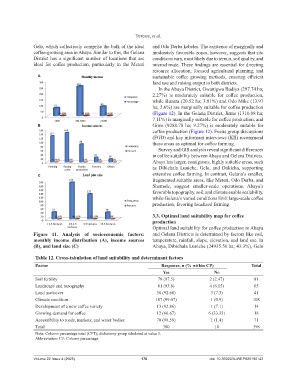
                Figure  11.  Analysis  of  socioeconomic  factors:   and Gelana Districts is determined by factors like soil,
                monthly  income  distribution  (A),  income  sources   temperature, rainfall, slope, elevation, and land use. In
                (B), and land size (C)                              Abaya, Dibichala Luniche (24935.56 ha; 43.3%), Gelo


                 Table 12. Cross‑tabulation of land suitability and determinant factors
                 Factor                                                 Response, n (% within CP)               Total
                                                                         Yes                   No
                 Soil fertility                                        79 (97.5)             2 (2.47)            81
                 Landscape and topography                              61 (93.8)             4 (6.15)            65
                 Land use/cover                                       38 (92.68)              3 (7.3)            41
                 Climate condition                                    107 (99.07)             1 (0.9)           108
                 Development of a new coffee variety                  13 (92.86)              1 (7.1)            14
                 Growing demand for coffee                            12 (66.67)             6 (33.33)           18
                 Accessibility to roads, markets, and water bodies    70 (98.59)              1 (1.4)            71
                 Total                                                   380                   18               398
                 Note: Column percentage total (CPT); dichotomy group tabulated at value 1.
                 Abbreviation: CP: Column percentage.


                Volume 22 Issue 4 (2025)                       170                           doi: 10.36922/AJWEP025190143

