


Page 32 - AJWEP-22-4
P. 32
Tekulu and Islam

                                                                    illnesses, disproportionately affect children, the elderly,
                                                                    and immunocompromised individuals.
                                                                       Satisfaction with municipal waste services was low,
                                                                    with over 75% of respondents expressing dissatisfaction
                                                                    or rating the service as poor. This dissatisfaction reflects
                                                                    a breakdown in trust between the public and local
                                                                    authorities,  a  challenge  also  identified  in  Lebanon
                                                                    and Syria, where municipal services have struggled to
                                                                    regain  functionality  post-crisis. 46,47   A weak feedback
                                                                    loop  between  service  providers  and  residents  hinders
                                                                    both accountability and responsive planning. In many
                                                                    instances, a lack of transparency  regarding  collection
                                                                    schedules, service coverage, and complaint mechanisms
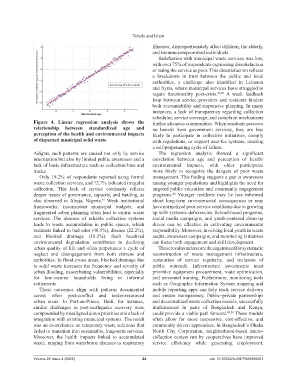
                Figure  4. Linear regression analysis shows  the    further alienates communities. When residents perceive
                relationship  between  standardized age  and        no  benefit  from  government  services,  they  are  less
                perception of the health and environmental impacts   likely to participate  in collective  initiatives,  comply
                of dispersed municipal solid waste                  with regulations, or support user-fee systems, creating
                                                                    a self-perpetuating cycle of failure.
                Adigrat, such patterns are caused not only by service   The  regression  analysis  showed  a  significant
                interruption but also by limited public awareness and a   correlation  between age and perception of health/
                lack of basic infrastructure such as collection bins and   environmental  impacts, with older participants
                trucks.                                             more  likely  to  recognize  the  dangers  of  poor waste
                  Only 18.2% of respondents reported  using formal   management. This finding suggests a gap in awareness
                waste collection services, and 72.7% indicated irregular   among younger populations and highlights the need for
                collection.  This  lack  of  service  continuity  reflects   targeted public education and community engagement
                deeper issues of governance, capacity, and funding, as   programs.   Younger residents may be less informed
                                                                             48
                also  observed  in Abuja,  Nigeria.  Weak  institutional   about  long-term  environmental  consequences  or  may
                                              45
                frameworks, inconsistent  municipal  budgets, and   have normalized poor service conditions due to growing
                fragmented urban planning often lead to erratic waste   up with systemic deficiencies. School-based programs,
                services.  The  absence  of reliable  collection  systems   social media campaigns, and youth-centered clean-up
                leads to waste accumulation  in public  spaces, which   drives  can  be  effective  in  cultivating  environmental
                residents linked to bad odor (48.5%), disease (22.2%),   responsibility. Moreover, involving local youth in waste
                and blocked drainage (18.2%). Such localized        audits, awareness campaigns, and monitoring initiatives
                environmental  degradation  contributes  to declining   can foster both engagement and skill development.
                urban quality of life and often perpetuates a cycle of   These results underscore the urgent need for systematic
                neglect  and  disengagement  from both  citizens  and   reconstruction  of waste management  infrastructure,
                authorities. In flood-prone areas, blocked drainage due   restoration of service regularity, and inclusion of
                to solid waste increases the frequency and severity of   public  outreach.  Infrastructure  investments  must
                urban flooding, exacerbating vulnerabilities, especially   prioritize  equipment  procurement,  route  optimization,
                for low-income  households living  in informal      and personnel training. Furthermore, monitoring tools
                settlements.                                        such as Geographic Information System mapping and
                  These  outcomes  align  with patterns  documented   mobile reporting apps can help track service delivery
                across  other  post-conflict  and  under-resourced   and ensure transparency. Public–private  partnerships
                urban areas. In Port-au-Prince, Haiti, for instance,   and decentralized waste collection models, successfully
                similar  challenges  in post-earthquake  recovery  were   implemented  in parts  of Bangladesh  and Kenya,
                compounded by misaligned donor priorities and a lack of   could provide a viable path forward. 49,50  These models
                integration with existing municipal systems. The result   often  allow  for  more  responsive,  cost-effective,  and
                was an overreliance on temporary waste solutions that   community-driven approaches. In Bangladesh’s Dhaka
                failed to transition into sustainable, long-term services.   North City  Corporation,  neighborhood-based  micro-
                Moreover, the health impacts linked to accumulated   collection centers run by cooperatives have improved
                waste, ranging from waterborne diseases to respiratory   service  efficiency  while  generating  employment.


                Volume 22 Issue 4 (2025)                        24                           doi: 10.36922/AJWEP025090061

