


Page 216 - AJWEP-22-5
P. 216
Suram, et al.

                 Table 7. BMWM practices of HCWs
                 No. Practices                                                  n (%)              Chi‑square p‑value
                                                                     Doctors    Nurses    Others
                                                                    (total=41) (total=50) (total=72)
                 1   Is PEP utilized during the handling of BMW?     31 (75.6)  43 (86.0)  68 (94.4)  8.337    0.015
                 2   Do you divide BMW into different categories?    36 (87.8)  46 (92.0)  67 (93.1)  0.949    0.622
                 3   Do you collect waste sharps using puncture-proof plastic  37 (90.2)  45 (90.0)  64 (88.9)  0.66  0.968
                     containers?
                 4   Do you follow color coding system for waste segregation?  39 (95.1)  46 (92.0)  68 (94.4)  0.456  0.796
                 5   At the point of origin, do you maintain a record for BMW?  34 (82.9)  39 (78.0)  62 (86.1)  1.365  0.505
                 6   Do you have a system to report injuries and accidents?  33 (80.5)  44 (88.0)  58 (80.1)  1.359  0.507
                 7   Have you been immunized against Hepatitis B?    37 (90.2)  45 (90.0)  59 (81.9)  2.297    0.317
                 8   After a needle stick injury or percutaneous injury, do   35 (85.4)  38 (76.0)  61 (84.7)  1.908  0.385
                     you follow PEP protocol?
                 9   Do you put non-infectious wastes in a black container?  35 (85.4)  42 (84.0)  62 (86.1)  0.105  0.949
                 10  Do you know the method to prepare 1 L of 1% sodium   34 (82.9)  44 (88.0)  64 (88.9)  0.878  0.645
                     hypochlorite from a stock of 5% concentration?
                 Abbreviations: BMW: Biomedical waste; BMWM: Biomedical waste management; HCWs: Healthcare workers; PEP: Post-exposure
                 prophylaxis; PPE: Personal protective equipment.


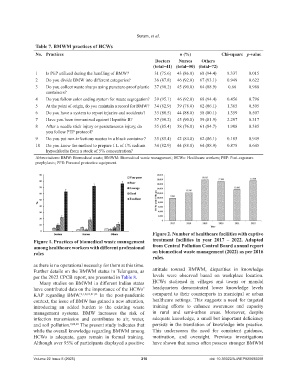
                                                                    Figure 2. Number of healthcare facilities with captive
                Figure 1. Practices of biomedical waste management   treatment  facilities  in  year  2017  –  2022.  Adapted
                among healthcare workers with different professional   from Central Pollution Control Board annual report
                roles                                               on biomedical waste management (2022) as per 2016
                                                                    rules.
                as there is no operational necessity for them at this time.
                Further details on the BMWM status in Telangana, as   attitude  toward BMWM, disparities  in knowledge
                per the 2022 CPCB report, are presented in Table 8.  levels were observed based on workplace location.
                  Many studies on BMWM in different Indian states   HCWs stationed  in villages and towns or mandal
                have contributed data on the importance of the HCWs’   headquarters  demonstrated  lower  knowledge  levels
                KAP regarding BMW.   2,7,8,10,21,23  In the  post-pandemic   compared to their counterparts in municipal or urban
                context, the issue of BMW has gained a new attention,   healthcare  settings. This  suggests  a  need  for targeted
                introducing  an added  burden to the  existing  waste   training  efforts  to  enhance  awareness  and  capacity
                management  systems. BMW increases the risk of      in rural and semi-urban areas. Moreover, despite
                infection  transmission  and  contributes  to  air,  water,   adequate knowledge, a small but important deficiency
                and soil pollution. 9,24,25  The present study indicates that   persists in the translation of knowledge into practice.
                while the overall knowledge regarding BMWM among    This  underscores  the  need  for  consistent  guidance,
                HCWs is adequate, gaps remain in formal training.   motivation,  and oversight. Previous investigations
                Although over 95% of participants displayed a positive   have shown that nurses often possess stronger BMWM


                Volume 22 Issue 5 (2025)                       210                           doi: 10.36922/AJWEP025090058

