


Page 12 - AN-2-3
P. 12
Advanced Neurology                                     Woven Endobridge embolization: Indications and innovation


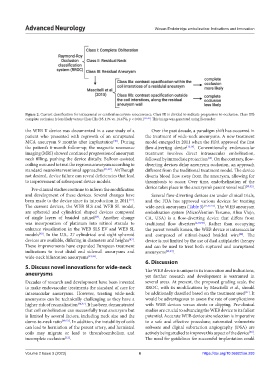
            Figure 2. Current classification for intracranial or cerebral aneurysm reoccurrence. Class III is divided to indicate progression to occlusion. Class IIIb
            complete occlusion is less likely versus Class IIIa (85.11% vs. 16.67%, p < 0.001) [31,43] . This image was generated using Biorender.

            the WEB II device was documented in a case study of a   Over the past decade, a paradigm shift has occurred in
            patient  who  presented  with  regrowth  of  an  unruptured   the treatment of wide-neck aneurysms. A new treatment
            MCA aneurysm 9  months  after implantation . During   model emerged in 2011 when the FDA approved the first
                                                 [40]
            the patient’s 6-month follow-up, the magnetic resonance   flow-diverting device [12,14] . Conventionally, endovascular
            imaging (MRI) showed continued progression of aneurysm   treatment involves direct intrasaccular embolization,
            neck filling, pushing the device distally. Balloon-assisted   followed by immediate protection . On the contrary, flow-
                                                                                         [39]
            coiling was used to treat the regrown aneurysm according to   diverting devices delay aneurysm occlusion, an approach
            standard neurointerventional approaches [41,42] . AltThough   different from the traditional treatment model. The device
            not desired, device failure can reveal deficiencies that lead   diverts blood flow away from the aneurysm, allowing for
            to improvement of subsequent device models.        thrombosis to occur. Over time, endothelization of the

              Pre-clinical studies continue to inform the modification   device takes place in the aneurysm’s parent vessel wall [39,52] .
            and  development  of  these  devices.  Several  changes  have   Several flow-diverting devices are under clinical trials,
            been made to the device since its introduction in 2011 .   and  the  FDA  has approved various  devices  for  treating
                                                        [12]
            The current devices, the WEB SLS and WEB SL model,   wide-neck aneurysms (Table 3) [11,53-57] . The WEB aneurysm
            are  spheroid and  cylindrical shaped devices  composed   embolization system (MicroVention Terumo, Aliso Viejo,
            of  single  layers  of  braided  nitinol .  Another  change   CA, USA) is a flow-diverting device that differs from
                                         [24]
            was incorporation of platinum into nitinol strands to   traditional flow diverters [2,38,58] . Rather than occupying
            enhance visualization in the WEB SLS EV and WEB SL   the parent vessel’s lumen, the WEB device is intrasaccular
            models . In the U.S., 27 cylindrical and eight spheroid   and composed of nitinol-based braided wire . The
                  [43]
                                                                                                       [38]
            devices are available, differing in diameters and heights .   device is not limited by the use of dual antiplatelet therapy
                                                        [43]
            These improvements have expanded European treatment   and can be used to treat both ruptured and unruptured
            indications to treat distal and sidewall aneurysms and   aneurysms [38,59] .
            wide-neck bifurcation aneurysms [44,45] .
                                                               6. Discussion
            5. Discuss novel innovations for wide-neck         The WEB device is unique in its innovation and indications,
            aneurysms                                          yet further research and development is warranted in
            Decades of research and development have been invested   several areas. At present, the proposed grading scale, the
            to make endovascular treatments the standard of care for   RROC, with its modifications by Mascitelli et al., should
            intrasaccular aneurysms. However, treating wide-neck   be additionally classified based on the treatment used . It
                                                                                                         [31]
            aneurysms can be technically challenging as they have a   would be advantageous to assess the rate of complications
            higher risk of recanalization [46,47] . It has been demonstrated   with WEB devices versus stents or clipping. Pre-clinical
            that coil embolization can successfully treat aneurysm but   studies are crucial to advancing the WEB device to its fullest
            is limited by several factors, including neck size and the   potential. Accurate WEB device size selection is imperative
            dome-to-neck ratio [48-51] . In addition, the instability of coils   to a safe and effective procedure; automated volumetric
            can lead to herniation of the parent artery, and herniated   software and digital subtraction angiography (DSA) are
            coils may migrate or lead to thromboembolism and   actively being studied to improve this aspect of the device .
                                                                                                           [60]
            incomplete occlusion .                             The need for guidelines for successful implantation could
                             [12]
            Volume 2 Issue 3 (2023)                         6                          https://doi.org/10.36922/an.293

