


Page 13 - AN-2-3
P. 13
Advanced Neurology                                     Woven Endobridge embolization: Indications and innovation


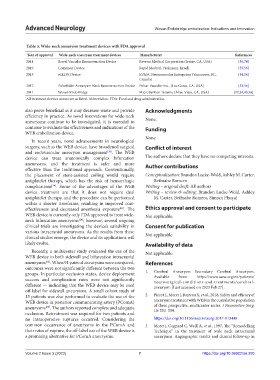
            Table 3. Wide‑neck aneurysm treatment devices with FDA approval
             Year of approval  Wide‑neck aneurysm treatment devices  Manufacturer                    References
            2014          Barrel Vascular Reconstruction Device  Reverse Medical Corporation (Irvine, CA, USA)  [56,74]
            2019          Comaneci Device                   Rapid Medical, (Yokneam, Israel)          [55,56]
            2015          eCLIPS Device                     EVASC Neurovascular Enterprises (Vancouver, BC,   [54,56]
                                                            Canada)
            2017          PulseRider Aneurysm Neck Reconstruction Device  Pulsar Vascular Inc., (Los Gatos, CA, USA)  [53,56]
            2011          Woven EndoBridge                  MicroVention Terumo (Aliso Viejo, CA, USA)  [12,24,43,56]
            All treatment devices names are as listed. Abbreviation: FDA: Food and drug administration.
            also prove beneficial as it may decrease waste and provide   Acknowledgments
            efficiency in practice. As novel innovations for wide-neck
            aneurysms continue to be investigated, it is essential to   None.
            continue to evaluate the effectiveness and indications of the   Funding
            WEB embolization device.
                                                               None.
              In  recent  years,  novel advancements in  neurological
            surgery, such as the WEB device, have broadened surgical   Conflict of interest
            and  endovascular  aneurysm  management .  The  WEB
                                               [30]
            device  can  treat  anatomically  complex  bifurcation   The authors declare that they have no competing interests.
            aneurysms, and the treatment is safer and more     Author contributions
            effective than the traditional approach. Conventionally,
            the placement of stent-assisted coiling would require   Conceptualization: Brandon Lucke-Wold, Ashley M. Carter,
            antiplatelet  therapy, which has the risk of hemorrhagic   Bethsabe Romero
            complications . Some of the advantages of the WEB   Writing – original draft: All authors
                       [24]
            device treatment are that it does not require dual   Writing – review & editing: Brandon Lucke-Wold, Ashley
            antiplatelet therapy, and the procedure can be performed   M. Carter, Bethsabe Romero, Simran Phuyal
            within a shorter timeframe, resulting in improved cost-
            effectiveness and decreased anesthesia exposure . The   Ethics approval and consent to participate
                                                    [61]
            WEB device is currently only FDA approved to treat wide-  Not applicable.
            neck bifurcation aneurysms ; however, several ongoing
                                   [24]
            clinical trials are investigating the device’s suitability in   Consent for publication
            various intracranial aneurysms. As the results from these   Not applicable.
            clinical studies emerge, the device and its applications will
            likely evolve.                                     Availability of data
              Recently, a multicenter study evaluated the use of the   Not applicable.
            WEB device in both sidewall and bifurcation intracranial
            aneurysms . When 91 pairs of aneurysms were compared,   References
                    [62]
            outcomes were not significantly different between the two
            groups. In particular occlusion status, device deployment   1.   Cerebral Aneurysm Secondary Cerebral Aneurysm.
                                                                  Available
                                                                                     https://www.aans.org/en/patients/
                                                                             from:
            success and complication rates were not significantly   neurosurgical-conditions-and-treatments/cerebral-
            different — indicating that the WEB device may be used   aneurysm [Last accessed on 2023 Feb 27].
            off-label for sidewall aneurysms. A small cohort study of
            15 patients was also performed to evaluate the use of the   2.   Pierot L, Moret J, Barreau X, et al., 2018, Safety and efficacy of
            WEB device in posterior communicating artery (PComA)   aneurysm treatment with WEB in the cumulative population
                                                                  of three prospective, multicenter series. J Neurointerv Surg,
            aneurysms . The authors reported complete and adequate   10: 553–559.
                    [63]
            occlusion. Retreatment was required for two patients and
            no  intraoperative  ruptures  occurred.  Considering  the      https://doi.org/10.1136/neurintsurg-2017-013448
            common occurrence of aneurysms in the PComA and    3.   Moret J, Cognard C, Weill A, et al., 1997, The “Remodelling
            their rates of rupture, the off-label use of the WEB device is   Technique” in the treatment of wide neck intracranial
            a promising alternative for PComA aneurysms.          aneurysms. Angiographic results and clinical follow-up in


            Volume 2 Issue 3 (2023)                         7                          https://doi.org/10.36922/an.293

