


Page 67 - AN-3-3
P. 67
Advanced Neurology                                                            mTOR inhibition in epilepsy


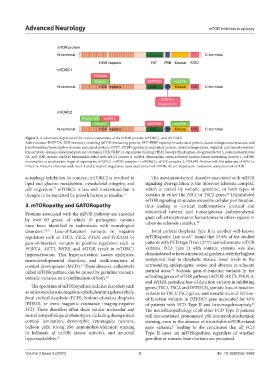
            Figure 2. A schematic depiction of the main components of the mTOR protein, mTORC1, and mTORC2
            Abbreviations: DEPTOR: DEP-domain-containing mTOR-interacting protein; FAT: FKBP-rapamycin-associated protein, ataxia-telangiectasia mutated, and
            transformation/transcription-domain-associated protein; FATC: FKBP-rapamycin-associated protein, ataxia-telangiectasia mutated, and transformation/
            transcription-domain-associated protein C-terminal; FRB: FKBP 12-rapamycin-binding; HEAT repeats: Huntington, elongation factor 3, protein phosphatase
            2A, and TOR repeats; mLST8: Mammalian lethal with SEC13 protein 8; mSIN1: Mammalian stress-activated protein kinase interacting protein 1; mTOR:
            mammalian or mechanistic target of rapamycin; mTORC1: mTOR complex 1; mTORC2: mTOR complex 2; PRAS40: Proline-rich Akt substrate of 40 kDa;
            Protor ½: Proteins observed with rictor 1 and 2; Raptor: Regulatory-associated protein of mTOR; Rictor: Rapamycin-insensitive companion of mTOR.
            autophagy inhibition. In contrast, mTORC2 is involved in   The most prototypical disorder associated with mTOR
            lipid and glucose metabolism, cytoskeletal integrity, and   signaling dysregulation is the tuberous sclerosis complex,
            cell migration.  mTORC2 is less well understood but is   which is caused by somatic, germline, or both types of
                        17
                                                                                                  20
            thought to be regulated by growth factors or insulin. 17  variants in either the TSC1 or TSC2 genes.  Disinhibited
                                                               mTOR signaling stimulates excessive cellular proliferation,
            3. mTORopathy and GATORopathy                      thus leading to cortical malformations (cortical and
            Proteins associated with the mTOR pathway are encoded   subcortical tubers) and tumorigenesis (subependymal
            by over 60 genes, of which 16 pathogenic variants   giant cell astrocytomas or hamartomas in other organs) in
                                                                                     20
            have been identified in individuals with neurological   tuberous sclerosis complex.
            disorders. 16,18  Loss-of-function variants in negative   Focal cortical dysplasia Type II is another well-known
                                                                                  21
            regulators such as TSC1, TSC2, PTEN, and STRADA or   mTORopathy. Lim et al.  found that 15.6% of the studied
            gain-of-function variants in positive regulators such as   patients with FCD type II (n=12/77) carried somatic mTOR
            PI3KCA,  AKT3,  RHEB,  and  MTOR, result in mTORC1   variants. FCD Type  II with somatic variants was also
            hyperactivation. This hyperactivation causes epilepsies,   demonstrated to have a mutational gradient, with the highest
            neurodevelopmental disorders, and malformations  of   mutational load in dysplastic tissues, lower levels in the
            cortical development (MCD).  These diseases, collectively   surrounding epileptogenic zones, and absence in adjacent
                                   16
                                                                          22
            called mTORopathies, can be caused by germline variants,   normal areas.  Somatic gain-of-function variants in the
            somatic variants, or a combination of both. 16     activating genes of mTOR pathway (MTOR, AKT3, PIK3CA,
                                                               and RHEB), germline loss-of-function variants in inhibiting
              The spectrum of mTORopathies includes disorders such   genes (TSC1, TSC2, and DEPDC5), somatic loss-of-function
            as tuberous sclerosis, megalencephaly, hemimegalencephaly,   variants in TSC1/TSC2 genes, and somatic second-hit loss-
            focal cortical dysplasia (FCD), bottom-of-sulcus dysplasia   of-function variants in  DEPDC5 gene accounted for 63%
            (BOSD),  or  even  magnetic  resonance  imaging-negative   of patients with FCD Type  II and hemimegalencephaly.
                                                                                                            23
            FCD. These disorders often share similar molecular and   The neurohistopathology of all other FCD Type II patients
            neurohistopathological phenotypes, including disorganized   still demonstrated pronounced pS6 immunohistochemical
            cortical lamination, dysmorphic cytomegalic neurons,   staining, even in the absence of identifiable mTOR-related
            balloon cells, strong pS6 immunohistochemical staining   gene variants,  leading to the conclusion that all FCD
                                                                          23
            (a hallmark of mTOR kinase activity), and neuronal   Type  II cases are mTORopathies, regardless of whether
            hyperexcitability. 19                              germline or somatic brain variants are presented.


            Volume 3 Issue 3 (2024)                         3                                doi: 10.36922/an.3568

