


Page 68 - AN-3-3
P. 68
Advanced Neurology                                                            mTOR inhibition in epilepsy


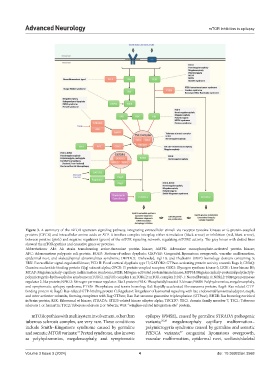
            Figure 3. A summary of the mTOR upstream signaling pathway, integrating extracellular stimuli via receptor tyrosine kinases or G-protein-coupled
            proteins (GPCR) and intracellular amino acids or ATP. It involves complex interplay, either stimulation (black arrow) or inhibition (red, blunt arrow),
            between positive (pink) and negative regulators (green) of the mTOR signaling network, regulating mTORC activity. The grey boxes with dotted lines
            showed the mTORopathies and causative genes or proteins.
            Abbreviations: Akt: Ak strain transforming serine-threonine protein kinase; AMPK: Adenosine monophosphate-activated protein kinase;
            APC: Adenomatous polyposis coli protein; BOSD: Bottom-of-sulcus dysplasia; CLOVES: Congenital lipomatous overgrowth, vascular malformation,
            epidermal nevi, and skeletal/spinal abnormalities syndrome; DEPDC5: Disheveled, Egl-10, and Pleckstrin (DEP) homology domain containing 5;
            ERK: Extracellular signal-regulated kinase; FCD II: Focal cortical dysplasia type II; GATOR2: GTPase-activating protein activity towards Rags 2; GNAQ:
            Guanine nucleotide-binding protein G(q) subunit alpha; GPCR: G protein-coupled receptor; GSK3: Glycogen synthase kinase-3; LKB1: Liver kinase B1;
            MCAP: Megalencephaly-capillary malformation syndrome; MEK: Mitogen-activated protein kinase kinase; MPPH: Megalencephaly-postaxial polydactyly-
            polymicrogyria-hydrocephalus syndrome; mTORC1: mTOR complex 1; mTORC2: mTOR complex 2; NF-1: Neurofibromin 1; NPRL2: Nitrogen permease
            regulator 2-like protein; NPRL3: Nitrogen permease regulator-like 3 protein; PI3K: Phosphatidylinositol 3-kinase; PMSE: Polyhydramnios, megalencephaly,
            and symptomatic epilepsy syndrome; PTEN: Phosphatase and tensin homolog; Raf: Rapidly accelerated fibrosarcoma protein; RagA: Ras-related GTP-
            binding protein A; RagC: Ras-related GTP-binding protein C; Ragulator: Rregulator of lysosomal signaling with late endosomal/lysosomal adaptor, mapk,
            and mtor activator subunits, forming complexes with Rag GTPase; Ras: Rat sarcoma guanosine triphosphatase (GTPase); RHEB: Ras homolog enriched
            in brain protein; RSK: Ribosomal s6 kinase; STRADA: STE20-related kinase adaptor alpha; TBC1D7: TBC1 domain family member 7; TSC1: Tuberous
            sclerosis 1 or hamartin; TSC2: Tuberous sclerosis 2 or tuberin; Wnt: “wingless-related integration site” protein.

              mTORopathies with multisystem involvement, other than   epilepsy (PMSE), caused by germline STRADA pathogenic
            tuberous sclerosis complex, are very rare. These conditions   variants; 25,26  megalencephaly capillary malformation–
            include Smith–Kingsmore syndrome caused by germline   polymicrogyria syndrome caused by germline and somatic
            and somatic MTOR variants;  Pretzel syndrome, also known   PIK3CA variants;  congenital lipomatous overgrowth,
                                  24
                                                                              27
            as polyhydramnios, megalencephaly, and symptomatic   vascular malformation, epidermal nevi, scoliosis/skeletal
            Volume 3 Issue 3 (2024)                         4                                doi: 10.36922/an.3568

