


Page 71 - AN-3-3
P. 71
Advanced Neurology                                                            mTOR inhibition in epilepsy


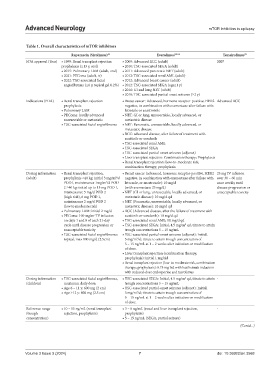
            Table 1. Overall characteristics of mTOR inhibitors
                               Rapamycin (Sirolimus) 51             Everolimus 52‑54            Temsirolimus 55
            FDA approval (Year)  • 1999: Renal transplant rejection   • 2009: Advanced RCC (adult)  2007
                           prophylaxis (≥13 y, oral)  • 2010: TSC‑associated SEGA (adult)
                           • 2015: Pulmonary LAM (adult, oral)  • 2011: Advanced pancreatic NET (adult)
                           • 2021: PEComa (adult, iv)  • 2012: TSC‑associated renal AML (adult)
                           •  2022: TSC‑associated facial   • 2012: Advanced breast cancer (adult)
                            angiofibroma (≥6 y, topical gel 0.2%) • 2012: TSC‑associated SEGA (age≥1 y)
                                                     • 2016: GI and lung NET (adult)
                                                     • 2018: TSC‑associated partial‑onset seizures (≥2 y)
            Indications (FDA)  •  Renal transplant rejection   •  Breast cancer: Advanced, hormone receptor‑positive, HER2  Advanced RCC
                            prophylaxis               negative, in combination with exemestane after failure with
                           • Pulmonary LAM            letrozole or anastrozole
                           •  PEComa: locally advanced   •  NET: GI or lung, unresectable, locally advanced, or
                            unresectable or metastatic  metastatic disease
                           • TSC‑associated facial angiofibroma  •  NET: Pancreatic, unresectable, locally advanced, or
                                                      metastatic disease
                                                     •  RCC: advanced disease, after failure of treatment with
                                                      sunitinib or sorafenib
                                                     • TSC‑associated renal AML
                                                     • TSC‑associated SEGA
                                                     • TSC‑associated partial‑onset seizures (adjunct)
                                                     • Liver transplant rejection: Combination therapy; Prophylaxis
                                                     •  Renal transplant rejection: Low‑to‑moderate risk,
                                                      combination therapy; prophylaxis
            Dosing information  •  Renal transplant rejection,   •  Breast cancer (advanced, hormone receptor‑positive, HER2  25 mg IV infusion
            (adult)         prophylaxis <40 kg: initial 3 mg/m /d   negative, in combination with exemestane after failure with  over 30 – 60 min
                                                  2
                            POD1, maintenance 1mg/m /d POD   letrozole, or anastrozole): 10 mg/d    once weekly until
                                              2
                            2 ≥40 kg: initial up to 15 mg POD 1,   (with exemestane 25 mg/d)  disease progression or
                            maintenance 5 mg/d POD 2    •  NET (GI or lung, unresectable, locally advanced, or   unacceptable toxicity
                            (high risk), 6 mg POD 1,   metastatic disease): 10 mg/d qd
                            maintenance 2 mg/d POD 2    •  NET (Pancreatic, unresectable, locally advanced, or
                            (low to moderate risk)    metastatic disease): 10 mg/d qd
                           • Pulmonary LAM: initial 2 mg/d  •  RCC (Advanced disease, after the failure of treatment with
                           •  PEComa: 100 mg/m  IV infusion   sunitinib or sorafenib): 10 mg/d qd
                                         2
                            on days 1 and 8 of each 21-day   • TSC‑associated renal AML: 10 mg/d qd
                            cycle until disease progression or   •  TSC‑associated SEGA: Initial, 4.5 mg/m  qd, titrate to attain
                                                                                2
                            unacceptable toxicity     trough concentrations 5 – 15 ng/mL
                           •  TSC‑associated facial angiofibroma:   •  TSC‑associated partial‑onset seizures (adjunct): Initial,
                            topical, max 800 mg/d (2.5cm)  5 mg/m /d; titrate to attain trough concentration of
                                                           2
                                                      5 – 15 ng/mL at 1 – 2 weeks after initiation or modification
                                                      of dose.
                                                     •  Liver transplant rejection (combination therapy;
                                                      prophylaxis): initial 1 mg bid
                                                     •  Renal transplant rejection (low‑to‑moderate risk, combination
                                                      therapy; prophylaxis): 0.75 mg bid with basiliximab induction
                                                      with reduced-dose cyclosporine and tacrolimus
            Dosing information  •  TSC‑associated facial angiofibroma,   •  TSC‑associated SEGA: Initial, 4.5 mg/m  qd, titrate to attain  -
                                                                                2
            (children)      maximum daily dose:       trough concentrations 5 – 15 ng/mL
                           • Age 6 – 11 y: 600 mg (2 cm)  •  TSC‑associated partial‑onset seizures (adjunct): Initial,
                           • Age ≥12 y: 800 mg (2.5 cm)  5 mg/m /d; titrate to attain trough concentration of
                                                           2
                                                      5 – 15 ng/mL at 1 – 2 weeks after initiation or modification
                                                      of dose.
            Reference range  •  10 – 15 ng/mL (renal transplant   •  3 – 8 ng/mL (renal and liver transplant rejection,   -
            (trough         rejection, prophylaxis)   prophylaxis)
            concentration)                           • 5 – 15 ng/mL (SEGA, partial seizure)
                                                                                                       (Contd...)


            Volume 3 Issue 3 (2024)                         7                                doi: 10.36922/an.3568

