


Page 102 - AN-4-4
P. 102
Advanced Neurology                                                Diffusion model for brain tumor classification


                                                               iterative refinement ensures training stability, avoids mode
                                                               collapse, and produces highly detailed synthetic images
                                                               that preserve tumor morphology and anatomical features.
                                                               Moreover, DDM does not require adversarial competition
                                                               between generator and discriminator networks, which is
                                                               the primary source of instability in GAN training. Instead,
                                                               it uses a maximum likelihood-based training objective,
                                                               resulting in a more predictable and stable convergence.
                                                               This stability ensures that the generated synthetic MRI
                                                               slices  maintain  consistent quality  across large batches,
                                                               enabling the downstream CDCNN classifier to learn from
                                                               a broader and more representative feature space.
                                                               4.1. Rationale for combining the DDM with a CDCNN
                                                               The CDCNN architecture is inherently powerful for medical
                                                               imaging tasks because it integrates deep convolutional
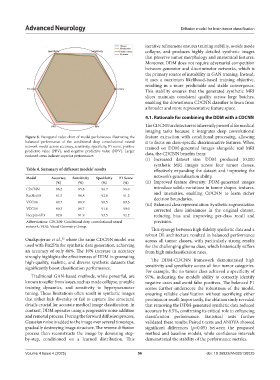
            Figure 8. Hexagonal radar chart of model performance illustrating the   feature extraction with conditional processing, allowing
            balanced performance of the conditional deep convolutional neural   it to focus on class-specific discriminative features. When
            network model across accuracy, sensitivity, specificity, F1 score, positive   trained on DDM-generated images alongside real MRI
            predictive value (PPV), and negative predictive value (NPV). Larger   data, the CDCNN benefits from:
            enclosed areas indicate superior performance.
                                                               (i)  Increased dataset size: DDM produced 10,000
                                                                  synthetic MRI images across four tumor classes,
            Table 4. Summary of different models’ results         effectively expanding the dataset and improving the

            Model      Accuracy   Sensitivity   Specificity   F1 Score   network’s generalization ability.
                         (%)      (%)       (%)      (%)       (ii)  Improved feature diversity: DDM-generated images
            CDCNN        96.2     95.8      96.7     96.0         introduce subtle variations in tumor shapes, textures,
            ResNet50     91.5     90.8      92.0     91.2         and intensities, enabling CDCNN to learn richer
                                                                  decision boundaries.
            VGG16        89.7     88.9      90.5     89.3      (iii) Balanced class representation: Synthetic augmentation
            VGG19        90.3     89.7      91.0     90.0         corrected class imbalances in the original dataset,
            InceptionV3  92.8     91.9      93.5     92.2         reducing bias and improving per-class recall and
            Abbreviations: CDCNN: Conditional deep convolutional neural   precision.
            network; VGG: Visual Geometry Group.
                                                                 This synergy between high-fidelity synthetic data and a
                                                               robust DL architecture resulted in balanced performance
            Onakpojeruo et al.,  where the same CDCNN model was   across all tumor classes, with particularly strong results
                           52
            used with Pix2Pix for synthetic data generation, achieving   for the challenging glioma class, which historically suffers
            an  accuracy  of  only  86%.  The  10%  increase  in  accuracy   from high misclassification rates.
            strongly highlights the effectiveness of DDM in generating
            high-quality, realistic, and diverse synthetic datasets that   The DDM-CDCNN framework demonstrated high
            significantly boost classification performance.    sensitivity and specificity across all four tumor categories.
                                                               For example, the no tumor class achieved a specificity of
              Traditional GAN-based methods, while powerful, are   97%, indicating the model’s ability to correctly identify
            known to suffer from issues, such as mode collapse, unstable   negative cases and avoid false positives. The balanced F1
            training dynamics, and sensitivity to hyperparameter   scores  further  underscore  the  robustness  of  the  model,
            tuning. These limitations often result in synthetic images   ensuring reliable classification without sacrificing either
            that either lack diversity or fail to capture fine structural   precision or recall. Importantly, the ablation study revealed
            details crucial for accurate medical image classification. In   that removing the DDM-generated synthetic data reduced
            contrast, DDM operates using a progressive noise addition   accuracy by 8.5%, confirming its critical role in enhancing
            and removal process. During the forward diffusion process,   classification performance. Statistical tests further
            Gaussian noise is added to the image over several timesteps,   validated these results: Paired t-tests and ANOVA showed
            gradually destroying image structure. The reverse diffusion   significant differences (p<0.05) between the proposed
            process  then  reconstructs  the  image  by  denoising  step-  method and baseline models, while confidence intervals
            by-step, conditioned on a learned distribution. This   demonstrated the stability of the performance metrics.


            Volume 4 Issue 4 (2025)                         96                           doi: 10.36922/AN025130025

