


Page 97 - AN-4-4
P. 97
Advanced Neurology Diffusion model for brain tumor classification
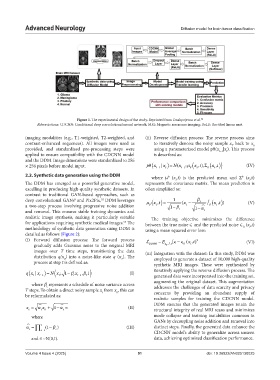
Figure 1. The experimental design of the study. Reprinted from Onakpojeruo et al. 52
Abbreviations: CDCNN: Conditional deep convolutional neural network; MRI: Magnetic resonance imaging; ReLU: Rectified linear unit.
imaging modalities (e.g., T1-weighted, T2-weighted, and (ii) Reverse diffusion process: The reverse process aims
contrast-enhanced sequences). All images were used as to iteratively denoise the noisy sample x back to x
0
T
provided, and standardized pre-processing steps were using a parameterized model pθ(x |x ). This process
t−1
t
applied to ensure compatibility with the CDCNN model is described as:
and the DDM. Image dimensions were standardized to 256
t
t ,
× 256 pixels before model input. p x t 1 | x N x( t 1 ; x t, ), x t (IV)
t
2.2. Synthetic data generation using the DDM where μ (x ,t) is the predicted mean and Σ (x ,t)
θ
θ
t
t
The DDM has emerged as a powerful generative model, represents the covariance matrix. The mean prediction is
excelling in producing high-quality synthetic datasets. In often simplified as:
contrast to traditional GAN-based approaches, such as
deep convolutional GANs and Pix2Pix, DDM leverages xt, 1 x ( t x t,) (V)
8
52
a two-step process involving progressive noise addition t 1 t 1 t
and removal. This ensures stable training dynamics and t t
realistic image synthesis, making it particularly suitable The training objective minimizes the difference
for applications requiring synthetic medical images. The between the true noise ∈ and the predicted noise ∈ (x ,t)
55
methodology of synthetic data generation using DDM is using a mean squared error loss: θ t
detailed as follows (Figure 2):
(i) Forward diffusion process: The forward process E [ ( x t,) 2 (VI)
gradually adds Gaussian noise to the original MRI DDPM x 0 ,, t t
images over T time steps, transitioning the data (iii) Integration with the dataset: In this study, DDM was
distribution q(x ) into a noise-like state q (x ). The employed to generate a dataset of 10,000 high-quality
0
T
process at step t is defined as: synthetic MRI images. These were synthesized by
t
t
qx x| t N x ; 1 t x , 1 t (I) iteratively applying the reverse diffusion process. The
generated data were incorporated into the training set,
1
t 1
augmenting the original dataset. This augmentation
where b represents a schedule of noise variance across
t
T steps. To obtain a direct noisy sample x from x , this can addresses the challenges of data scarcity and privacy
concerns by providing an abundant supply of
t
0
be reformulated as:
realistic samples for training the CDCNN model.
x t x 1 t (II) DDM ensures that the generated images retain the
structural integrity of real MRI scans and minimizes
0
t
where mode collapse and training instabilities common in
GANs by decoupling noise addition and removal into
t 1 ( ) (III) distinct steps. Finally, the generated data enhance the
t 1 s
s
CDCNN model’s ability to generalize across unseen
and ∈~N(0,I). data, achieving optimized classification performance.
Volume 4 Issue 4 (2025) 91 doi: 10.36922/AN025130025

