


Page 98 - AN-4-4
P. 98
Advanced Neurology                                                Diffusion model for brain tumor classification


            Algorithm 1: Pseudocode for synthetic data generation   (iii) Grayscale conversion and resizing: Images were
            and model training                                    converted to grayscale for consistency and resized
                                                                  to standardized dimensions of 256 × 256 pixels to
                for epoch in range(num_epochs):                   simplify computation.
                  for real_images in train_loader:             (iv)  Cropping: Unnecessary regions were cropped, focusing
                    noise = sample_gaussian_noise()               the model’s attention on relevant areas of the brain.
                    synthetic_images  =  diffusion_model.      (v)  Data partitioning: The dataset was divided into
                    reverse_process(noise)                        training  and  testing  subsets  (80%  training  and  20%
                      combined_images = concatenate(real_         testing) to ensure balanced evaluation.
                    images, synthetic_images)                    This pre-processing pipeline ensured standardized,
                    predictions = CDCNN(combined_images)       high-quality data for the effective training of the CDCNN
                    loss = cross_entropy(predictions, labels)  model. The distribution of the datasets for training and
                    optimizer.zero_grad()                      testing the model is displayed in Table 1.
                    loss.backward()
                    optimizer.step()                           2.4. CDCNN
                                                               The proposed CDCNN model can operate on both
            2.3. Image pre-processing                          synthetic and real datasets, as described in past studies.  It
                                                                                                          8,52
            Image pre-processing enhances crucial features and   has four layers of convolution with a hierarchical degree of
            reduces noise, ensuring better model performance. The   feature extraction, three layers of max-pooling, a dropout
            following steps were employed:                     regularization of dense layers to prevent overfitting,
            (i)  Contrast enhancement: Techniques were applied   and a Softmax activation function to categorize multi-
               to improve the visibility of critical features in brain   class images by classifying them as glioma, meningioma,
               tumor images, aiding better classification.     pituitary tumor, and normal tissue. The output values were
            (ii)  Format conversion: PNG images were converted to   then scaled into a probability distribution through scaling
               JPG to ensure compatibility with CNN frameworks,   0–1 using the Softmax function. Equation VII was used
               reduce file size, and standardize formats.      to define the Softmax activation function:


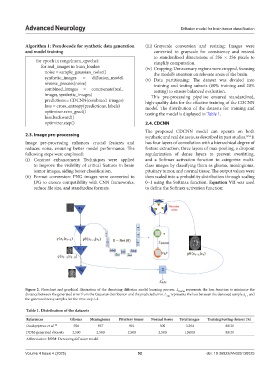
            Figure 2. Flowchart and graphical illustration of the denoising diffusion model learning process. L DDPM  represents the loss function to minimise the
            distance between the generated error from the Gaussian distribution and the predicted error. L  represents the loss between the denoised sample x  and
                                                                                                         t−1
                                                                        Adv
            the generated noisy samples for the time step t−1.
            Table 1. Distribution of the datasets
            References         Glioma  Meningioma   Pituitary tumor  Normal tissue  Total images  Training/testing dataset (%)
            Onakpojeruo et al.  52  926    937          901          500        3,264            80/20
            DDM-generated datasets  2,500  2,500       2,500        2,500       10,000           80/20
            Abbreviation: DDM: Denoising diffusion model.


            Volume 4 Issue 4 (2025)                         92                           doi: 10.36922/AN025130025

