


Page 16 - AN-4-4
P. 16
Advanced Neurology                                                     Epilepsy after traumatic brain injuries


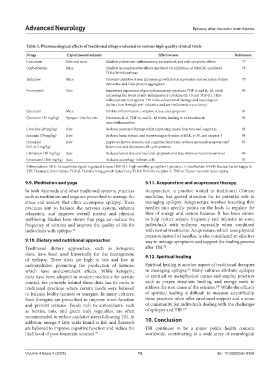
            Table 3. Pharmacological effects of traditional drugs evaluated in various high‑quality clinical trials
            Drugs             Experimental animals                  Effectiveness                    References
            Curcumin         Rats and mice    Exhibits potent anti-inflammatory, antioxidant, and anti-apoptotic effects  77
            Oxyberberine     Mice             Exhibits neuroprotective effects mediated via inhibition of HMGB1-mediated   78
                                              TLR4/NFκB pathway
            Trehalose        Mice             Prevents oxidative stress; increases growth factor expression and secretion; delays   79
                                              dementia; and halts protein aggregation
            Perampanel       Rats             Suppresses expression of pro-inflammatory cytokines TNF-α and IL-1β, while   80
                                              increasing the levels of anti-inflammatory cytokines IL-10 and TGF-β1. (This
                                              reflects protection against TBI-induced neuronal damage and neurological
                                              dysfunction through anti-oxidative and anti-inflammatory activity.)
            Quercetin        Mice             Inhibits inflammation, oxidative stress, and apoptosis    81
            Quercetin (30 mg/kg)  Sprague–Dawley rats  Decreases IL-6, TNF-α, and IL-1β levels, leading to a reduction in   82
                                              neuroinflammation
            Catechin (20 mg/kg)  Rats         Reduces neuronal damage while improving motor function and cognition  83
            Sesamin (30 mg/kg)  Rats          Reduces brain edema, and suppressing activation of ERK, p-38, and caspase-3  84
            Honokiol         Rats             Improves motor, sensory, and cognitive functions; reduces neuronal apoptosis and   85
            (0.5 or 2 mg/kg)                  lesion size; and decreases cell cycle proteins
            Cinnamon (10 mg/kg)  Rats         Reduces lesion size and neuronal apoptosis and may improve neuronal survival  86
            Resveratrol (100 mg/kg) Rats      Reduces autophagy in brain cells                          87
            Abbreviations: ERK: Extracellular signal-regulated kinase; HMGB1: High mobility group box 1 protein; IL: Interleukin; NFκB: Nuclear factor kappa B;
            TBI: Traumatic brain injury; TGF-β: Transforming growth factor beta; TLR4: Toll-like receptor 4; TNF-α: Tumor necrosis factor-alpha.

            9.9. Meditation and yoga                           9.11. Acupuncture and acupressure therapy
            In both Ayurveda and other traditional systems, practices   Acupuncture, a practice rooted in traditional Chinese
            such as meditation and yoga are prescribed to manage the   medicine, has gained attention for its potential role in
            stress  and  anxiety  that  often  accompany  epilepsy.  These   managing epilepsy. Acupuncture involves inserting thin
            practices aim to balance the nervous system, enhance   needles into specific points on the body to regulate the
            relaxation, and improve overall mental and physical   flow of energy and restore balance. It has been shown
            well-being. Studies have shown that yoga can reduce the   to help reduce seizure frequency and intensity in some
            frequency of seizures and improve the quality of life for   individuals with epilepsy, especially when combined
            individuals with epilepsy. 96                      with herbal treatments. Acupressure, which uses physical
                                                               pressure instead of needles, is also considered an effective
            9.10. Dietary and nutritional approaches           way to manage symptoms and support the healing process
            Traditional dietary approaches, such as ketogenic   after TBI. 98
            diets,  have  been  used  historically  for  the  management   9.12. Spiritual healing
            of epilepsy. These diets are high in fats and low in
            carbohydrates, promoting the production of ketones,   Spiritual healing is another aspect of traditional therapies
                                                                                 99
            which  have  anticonvulsant  effects.  While  ketogenic   in  managing  epilepsy.   Many  cultures  attribute  epilepsy
            diets have been adopted in modern medicine for seizure   to spiritual or metaphysical causes and employ practices
            control, the principle behind these diets has its roots in   such as prayer, ritualistic healing, and energy work to
                                                                                             100
            traditional practices where certain foods were believed   address the root cause of the seizures.  While the efficacy
            to balance bodily humors or energies. In many cultures,   of  spiritual  healing  is  difficult  to  measure  scientifically,
            food therapies are prescribed to improve brain function   these practices often offer emotional support and a sense
            and prevent seizures. Foods rich in antioxidants, such   of community for individuals dealing with the challenges
            as berries, nuts, and green leafy vegetables, are often   of epilepsy and TBI. 101
            recommended to reduce oxidative stress following TBI. In
            addition, omega-3 fatty acids found in fish and flaxseeds   10. Conclusion
            are believed to improve cognitive function and reduce the   TBI continues to be a major public health concern
            likelihood of post-traumatic seizures. 97          worldwide, contributing to a wide array of neurological


            Volume 4 Issue 4 (2025)                         10                               doi: 10.36922/an.8356

