


Page 11 - AN-4-4
P. 11
Advanced Neurology                                                     Epilepsy after traumatic brain injuries


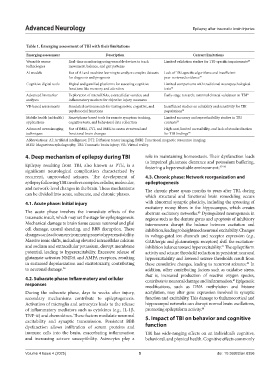
            Table 1. Emerging assessment of TBI with their limitations
            Emerging assessment               Description                          Current limitations
            Wearable sensor   Real-time monitoring using wearable devices to track   Limited validation studies for TBI-specific impairments 28
            technologies      movement, balance, and gait patterns
            AI models         Use of AI and machine learning to analyze complex datasets   Lack of TBI-specific algorithms and insufficient
                              for diagnosis and prognosis              peer-reviewed evidence 29
            Cognitive digital tools  Digital and gamified platforms for assessing cognitive   Limited comparisons with traditional neuropsychological
                              functions like memory and attention      tests 30
            Advanced biomarker   Exploration of microRNAs, extracellular vesicles, and   Early-stage research; minimal clinical validation in TBI 31
            analyses          inflammatory markers for objective injury measures
            VR-based assessments  Simulated environments for testing motor, cognitive, and   Insufficient studies on reliability and sensitivity for TBI
                              psychosocial functions                   populations 32
            Mobile health (mHealth)   Smartphone-based tools for remote symptom tracking,   Limited accuracy and reproducibility studies in TBI
            applications      cognitive tests, and behavioral data collection  contexts 33
            Advanced neuroimaging   Use of fMRI, DTI, and MEG to assess structural and   High cost, limited accessibility, and lack of standardization
            techniques        functional brain changes                 for TBI findings 34
            Abbreviations: AI: Artificial intelligence; DTI: Diffusion tensor imaging; fMRI: Functional magnetic resonance imaging;
            MEG: Magnetoencephalography; TBI: Traumatic brain injury; VR: Virtual reality.

            4. Deep mechanism of epilepsy during TBI           role in maintaining homeostasis. Their dysfunction leads
                                                               to impaired glutamate clearance and potassium buffering,
            Epilepsy resulting from TBI, also known as PTE, is a   fostering a hyperexcitable environment. 37-39
            significant neurological complication characterized by
            recurrent,  unprovoked  seizures.  The  development  of   4.3. Chronic phase: Network reorganization and
            epilepsy following TBI involves complex cellular, molecular,   epileptogenesis
            and network-level changes in the brain. These mechanisms   The chronic phase spans months to years after TBI, during
            can be divided into acute, subacute, and chronic phases.  which structural and functional brain remodeling occurs
            4.1. Acute phase: Initial injury                   with abnormal synaptic plasticity, including the sprouting of
                                                               excitatory mossy fibers in the hippocampus, which creates
            The acute phase involves the immediate effects of the   aberrant excitatory networks.  Dysregulated neurogenesis in
                                                                                     40
            traumatic insult, which may set the stage for epileptogenesis.   regions such as the dentate gyrus and apoptosis of inhibitory
            Mechanical damage to brain tissue causes neuronal and glial   interneurons disrupt the balance between excitation and
            cell damage, axonal shearing, and BBB disruption.  These   inhibition, leading to heightened neuronal excitability. Changes
            changes can lead to an environment prone to hyperexcitability.   in voltage-gated ion channels and receptor expression (e.g.,
            Massive ionic shifts, including elevated intracellular calcium   GABAergic and glutamatergic receptors) shift the excitation-
            and sodium and extracellular potassium, disrupt membrane   inhibition balance toward hyperexcitability.  The epileptiform
                                                                                               41
            potential, leading to hyperexcitability. Excessive release of   activity and seizure threshold reduction in persistent neuronal
            glutamate activates NMDA and AMPA receptors, resulting   hyperexcitability and lowered seizure thresholds result from
            in sustained depolarization and excitotoxicity, contributing   these cumulative changes, leading to recurrent seizures.  In
                                                                                                          42
            to neuronal damage. 36                             addition, other contributing factors such as oxidative stress,
                                                               that is,  increased  production  of  reactive  oxygen  species,
            4.2. Subacute phase: Inflammatory and cellular     contribute to neuronal damage and inflammation.  Epigenetic
                                                                                                    43
            responses                                          modifications, such as DNA methylation and histone
            During the  subacute  phase, days  to  weeks  after  injury,   acetylation, may alter gene expression involved in synaptic
            secondary mechanisms contribute to epileptogenesis.   function and excitability. This damage to thalamocortical and
            Activation of microglia and astrocytes leads to the release   hippocampal networks can disrupt normal brain oscillations,
            of inflammatory mediators such as cytokines (e.g., IL-1β,   promoting epileptiform activity. 44
            TNF-α) and chemokines. These factors modulate neuronal   5. Impact of TBI on behavior and cognitive
            excitability and synaptic transmission. Persistent BBB
            dysfunction allows infiltration of serum proteins and   function
            immune cells into the brain, exacerbating inflammation   TBI has wide-ranging effects on an individual’s cognitive,
            and  increasing  seizure  susceptibility. Astrocytes  play a   behavioral, and physical health. Cognitive effects commonly


            Volume 4 Issue 4 (2025)                         5                                doi: 10.36922/an.8356

