


Page 9 - AN-4-4
P. 9
Advanced Neurology                                                     Epilepsy after traumatic brain injuries


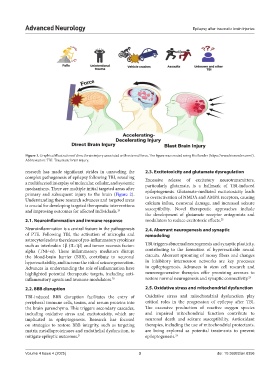
            Figure 1. Graphical illustration of direct brain injury associated with external force. The figure was created using BioRender (https://www.biorender.com/).
            Abbreviation: TBI: Traumatic brain injury.

            research has made significant strides in unraveling the   2.3. Excitotoxicity and glutamate dysregulation
            complex pathogenesis of epilepsy following TBI, revealing   Excessive release of excitatory neurotransmitters,
            a multifaceted interplay of molecular, cellular, and systemic   particularly glutamate, is a hallmark of TBI-induced
            mechanisms. There are multiple initial targeted areas after   epileptogenesis. Glutamate-mediated excitotoxicity leads
            primary and subsequent injury to the brain (Figure  2).   to overactivation of NMDA and AMPA receptors, causing
            Understanding these research advances and targeted areas
            is crucial for developing targeted therapeutic interventions   calcium influx, neuronal damage, and increased seizure
            and improving outcomes for affected individuals. 19  susceptibility. Novel therapeutic approaches include
                                                               the development of glutamate receptor antagonists and
            2.1. Neuroinflammation and immune response         modulators to reduce excitotoxic effects. 22
            Neuroinflammation is a central feature in the pathogenesis   2.4. Aberrant neurogenesis and synaptic
            of PTE. Following TBI, the activation of microglia and   remodeling
            astrocytes leads to the release of pro-inflammatory cytokines
            such as interleukin 1β (IL-1β) and tumor necrosis factor-  TBI triggers abnormal neurogenesis and synaptic plasticity,
            alpha  (TNF-α).  These  inflammatory  mediators  disrupt   contributing to the formation of hyperexcitable neural
            the blood-brain barrier (BBB), contribute to neuronal   circuits. Aberrant sprouting of mossy fibers and changes
            hyperexcitability, and increase the risk of seizure generation.   in inhibitory interneuron networks are key processes
            Advances in understanding the role of inflammation have   in epileptogenesis. Advances in stem cell research and
            highlighted potential therapeutic targets, including anti-  neuroregenerative  therapies  offer  promising  avenues  to
            inflammatory agents and immune modulators. 20      restore normal neurogenesis and synaptic connectivity. 23

            2.2. BBB disruption                                2.5. Oxidative stress and mitochondrial dysfunction
            TBI-induced BBB disruption facilitates the entry of   Oxidative stress and mitochondrial dysfunction play
            peripheral immune cells, toxins, and serum proteins into   critical  roles in  the  progression  of  epilepsy  after  TBI.
            the brain parenchyma. This triggers secondary cascades,   The  excessive production of  reactive oxygen species
            including oxidative stress and excitotoxicity, which are   and impaired mitochondrial function contribute to
            implicated in epileptogenesis. Research has focused   neuronal death and seizure susceptibility. Antioxidant
            on  strategies  to  restore  BBB integrity,  such  as  targeting   therapies, including the use of mitochondrial protectants,
            matrix metalloproteinases and endothelial dysfunction, to   are being explored as potential treatments to prevent
            mitigate epileptic outcomes. 21                    epileptogenesis. 24


            Volume 4 Issue 4 (2025)                         3                                doi: 10.36922/an.8356

