


Page 10 - AN-4-4
P. 10
Advanced Neurology                                                     Epilepsy after traumatic brain injuries


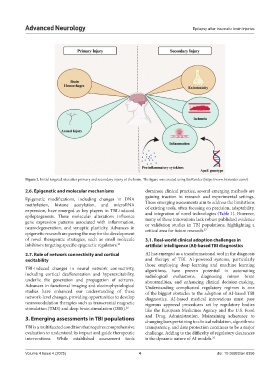
            Figure 2. Initial targeted sites after primary and secondary injury of the brain. The figure was created using BioRender (https://www.biorender.com/).

            2.6. Epigenetic and molecular mechanisms           dominate clinical practice, several emerging methods are
                                                               gaining traction in research and experimental settings.
            Epigenetic modifications, including changes in DNA
            methylation, histone acetylation, and microRNA     These emerging assessments aim to address the limitations
                                                               of existing tools, often focusing on precision, adaptability,
            expression, have emerged as key players in TBI-induced   and integration of novel technologies (Table 1). However,
            epileptogenesis. These molecular alterations influence   many of these innovations lack robust published evidence
            gene expression patterns associated with inflammation,   or validation studies in TBI populations, highlighting a
            neurodegeneration, and synaptic plasticity. Advances in   critical area for future research. 27
            epigenetic research are paving the way for the development
            of novel therapeutic strategies, such as small molecule   3.1. Real-world clinical adoption challenges in
            inhibitors targeting specific epigenetic regulators. 25  artificial intelligence (AI)-based TBI diagnostics

            2.7. Role of network connectivity and cortical     AI has emerged as a transformational tool in the diagnosis
            excitability                                       and therapy of TBI. AI-powered systems, particularly
                                                               those employing deep learning and machine learning
            TBI-induced  changes  in  neural  network  connectivity,   algorithms, have proven potential in automating
            including  cortical deafferentation and  hyperexcitability,   radiological evaluations, diagnosing minor brain
            underlie the generation and propagation of seizures.   abnormalities, and enhancing clinical decision-making.
            Advances in functional imaging and electrophysiological   Understanding  complicated  regulatory  regimes  is  one
            studies have enhanced our understanding of these   of the biggest obstacles to the adoption of AI-based TBI
            network-level changes, providing opportunities to develop   diagnostics. AI-based medical innovations must pass
            neuromodulation therapies such as transcranial magnetic   rigorous approval procedures set by regulatory bodies
            stimulation (TMS) and deep brain stimulation (DBS). 26  like the European Medicines Agency and the U.S. Food

            3. Emerging assessments in TBI populations         and  Drug  Administration.  Maintaining  adherence  to
                                                               changing laws pertaining to clinical validation, algorithmic
            TBI is a multifaceted condition that requires comprehensive   transparency, and data protection continues to be a major
            evaluation to understand its impact and guide therapeutic   challenge. Adding to the difficulty of regulatory clearances
            interventions. While established assessment tools   is the dynamic nature of AI models. 35


            Volume 4 Issue 4 (2025)                         4                                doi: 10.36922/an.8356

