


Page 13 - AN-4-4
P. 13
Advanced Neurology                                                     Epilepsy after traumatic brain injuries


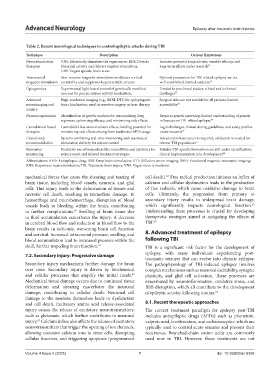
            Table 2. Recent neurological techniques to control epileptic attacks during TBI
            Technique                      Description                            Current limitations
            Neurostimulation   VNS: Electrically stimulates the vagus nerve; RNS: Detects   Invasive, potential surgical risks, variable efficacy, and
            therapies      abnormal activity and delivers targeted stimulation;   long-term effects under research 51
                           DBS: Targets specific brain areas
            Transcranial   Non-invasive magnetic stimulation modulates cortical   Optimal parameters for TBI-related epilepsy are not
            magnetic stimulation excitability and suppresses hyperexcitable circuits  well-established; limited evidence 52
            Optogenetics   Experimental light-based control of genetically modified   Limited to preclinical studies; ethical and technical
                           neurons for precise seizure activity modulation.  challenges 53
            Advanced       High-resolution imaging (e.g., fMRI, DTI) for epileptogenic   Surgical risks are not suitable for all patients; limited
            neuroimaging and   focus localization; used in resective surgery or laser therapy  accessibility 54
            surgery
            Pharmacogenomics  Identification of genetic markers for personalizing drug   Requires genetic screening; limited understanding of genetic
                           regimens, optimizing efficacy, and minimizing side effects  influences on TBI-related epilepsy 55
            Cannabinoid-based   Cannabidiol has anticonvulsant effects, holding potential for   Legal challenges, limited dosing guidelines, and safety profiles
            therapies      minimizing side effects arising from traditional AEDs usage  under research 56
            Closed-loop    Systems combining real-time monitoring with automated   Advanced infrastructure is required; validation is needed for
            neuromodulation  stimulation delivery for seizure control  diverse TBI populations 57
            Biomarker      Predictive use of biomarkers like microRNAs and cytokines for  Reliable TBI-specific biomarkers are still under identification;
            monitoring     seizure onset and tailored treatment strategies  clinical implementation is in development 58
            Abbreviations: AED: Antiepileptic drug; DBS: Deep brain stimulation; DTI: Diffusion tensor imaging; fMRI: Functional magnetic resonance imaging;
            RNS: Responsive neurostimulation; TBI: Traumatic brain injury; VNS: Vagus nerve stimulation.

            mechanical forces that cause the shearing and tearing of   cell death).  Free radical production initiates an influx of
                                                                        64
            brain tissue, including blood vessels, neurons, and glial   calcium and cellular dysfunction leads to the production
            cells. This injury leads to the deformation of tissues and   of free radicals, which cause oxidative damage to brain
            necrotic cell death, resulting in immediate damage. In   cells. Ultimately, the progression from primary to
            hemorrhage and microhemorrhage,  disruption of blood   secondary injury results  in  widespread  brain  damage,
                                                                                                            65
            vessels leads to bleeding within the brain, contributing   which significantly impacts neurological function.
            to further complications.  Swelling of brain tissue due   Understanding these processes is crucial for developing
                                 60
            to fluid accumulation exacerbates the injury. A decrease   therapeutic strategies aimed at mitigating the effects of
            in cerebral blood flow and reduction in blood flow to the   TBI. 66
            brain results in ischemia, worsening brain cell function
            and survival. Increased intracranial pressure, swelling, and   8. Advanced treatment of epilepsy
            blood accumulation lead to increased pressure within the   following TBI
            skull, further impeding brain function. 61         TBI is a significant risk factor for the development of
                                                               epilepsy,  with  many  individuals  experiencing  post-
            7.2. Secondary injury: Progressive damage
                                                               traumatic seizures that can evolve into chronic epilepsy.
            Secondary injury mechanisms further damage the brain   The pathophysiology of TBI-induced epilepsy involves
            over time. Secondary injury is driven by biochemical   complex mechanisms such as neuronal excitability, synaptic
            and cellular processes that amplify the initial insult.    plasticity, and glial cell activation. These processes are
                                                         62
            Mechanical tissue damage occurs due to continued tissue   exacerbated by neuroinflammation, oxidative stress, and
            deformation and shearing exacerbates the neuronal   BBB disruption, which all contribute to the development
            damage, contributing to cellular death. Neuronal cell   of epileptic activity following trauma. 67
            damage to the neurons themselves leads to dysfunction
            and cell death. Excitatory amino  acid  release-associated   8.1. Recent therapeutic approaches
            injury causes the release of excitatory neurotransmitters,   The current treatment paradigm for epilepsy post-TBI
            such as glutamate, which further contributes to neuronal   includes antiepileptic drugs (AEDs) such as phenytoin,
            injury.  Calcium influx also affects the release of excitatory   valproic acid, levetiracetam, and carbamazepine, which are
                 63
            neurotransmitters that trigger the opening of ion channels,   typically used to control acute seizures and prevent their
            allowing excessive calcium ions to enter cells, disrupting   recurrence. Branched-chain amino acids are commonly
            cellular function, and triggering apoptosis (programmed   used  now  in TBI. However, these  treatments  are  not


            Volume 4 Issue 4 (2025)                         7                                doi: 10.36922/an.8356

