


Page 67 - AN-4-4
P. 67
Advanced Neurology                                                                 Seizure precipitants


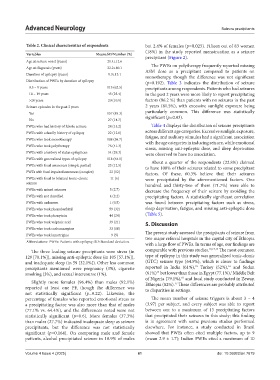
            Table 2. Clinical characteristics of respondents   but 2.4% of females (p=0.025). Fifteen out of 83 women
                                                               (18%) in the study reported menstruation as a seizure
            Variables                     Mean±SD/Number (%)
                                                               precipitant (Figure 2).
            Age at seizure onset (years)       21.4±12.6
                                                                 The PWEs on polytherapy frequently reported missing
            Age at diagnosis (years)           22.2±80.1       ASM dose as a precipitant compared to patients on
            Duration of epilepsy (years)       9.9±13.1        monotherapy, though the difference was not significant
            Distribution of PWEs by duration of epilepsy       (p=0.192).  Table 3 indicates the distribution of seizure
             0.5 – 9 years                     115 (62.5)      precipitants among respondents. Patients who had seizures
             10 – 19 years                     43 (23.4)       in the past 2 years were more likely to report precipitating
             >20 years                         20 (10.9)       factors (96.2 %) than patients with no seizures in the past
            Seizure episodes in the past 2 years               2  years (81.5%), with excessive sunlight exposure being
             Yes                               157 (85.3)      particularly common. This difference was statistically
             No                                27 (14.7)       significant (p=0.03).
            PWEs who had history of febrile seizure  28 (15.2)   Table 4 displays the distribution of seizure precipitants
            PWEs with a family history of epilepsy  22 (12.0)  across different age categories. Excessive sunlight exposure,
            PWEs who took monotherapy          108 (58.7)      fatigue, and auditory stimulus had a significant association
                                                               with the age categories in inducing seizure, while emotional
            PWEs who took polytherapy          76 (41.3)       stress, missing anti-epileptic dose, and sleep deprivation
            PWEs with a history of status epilepticus  54 (29.3)  were observed to have no association.
            PWEs with generalized types of epilepsy  118 (64.1)  About a quarter of the respondents (22.8%) claimed
            PWEs with focal awareness (simple partial)  23 (12.5)
                                                               to have 100% of their seizures related to some precipitant
            PWEs with focal impaired awareness (complex)  22 (12)  factors. Of these, 60.3% believe that their seizures
            PWEs with focal to bilateral tonic–clonic   11 (6)  were precipitated by the aforementioned factors. One
            seizure                                            hundred and thirty-two of them (71.7%) were able to
            PWEs with mixed seizures            5 (2.7)        decrease the frequency of their seizure by avoiding the
            PWEs with not classified            4 (2.2)        precipitating factors. A statistically significant correlation
            PWEs with unknown                   1 (0.5)        was found between precipitating factors such as stress,
            PWEs who took phenobarbital         59 (32)        sleep deprivation, fatigue, and missing anti-epileptic dose
            PWEs who took phenytoin             44 (24)        (Table 5).
            PWEs who took valproic acid         39 (21)        5. Discussion
            PWEs who took carbamazepine         33 (18)
            PWEs who took lamotrigine           9 (5)          The present study assessed the precipitants of seizure from
                                                               two major referral hospitals in the capital city of Ethiopia
            Abbreviations: PWEs: Patients with epilepsy; SD: Standard deviation.
                                                               with a large flow of PWEs. In terms of age, our findings are
              The three leading seizure precipitants were stress (in   comparable with previous studies. 10,13,14  The most common
            129 [70.1%]), missing anti-epileptic dose (in 105 [57.1%]),   type of epilepsy in this study was generalized tonic-clonic
            and inadequate sleep (in 59 [32.1%]). Other less common   (GTC) seizure type (64.5%), which is closer to findings
                                                                                    15
                                                                                                  16
            precipitants  mentioned  were  pregnancy  (3%),  cigarette   reported in India (61%),  Turkey (52%),  and Sudan
                                                                                                   1
                                                                    14
            smoking (3%), and sexual intercourse (1%).         (61%)  but lower than those in Egypt (77.1%), Middle Belt
                                                               of Nigeria (79.1%),  and local study conducted in Zeway,
                                                                              10
              Slightly more  females  (96.4%)  than males (92.1%)   Ethiopia (82%).  These differences are probably attributed
                                                                           17
            reported at least one PF, though the difference was   to disparities in settings.
            not statistically significant (p=0.22). Likewise, the
            percentage of females who reported emotional stress as   The mean number of seizure triggers is about 3 – 4
            a precipitating factor was also more than that of males   (3.97) per subject, and every subject was able to report
            (77.1% vs. 64.4%), and the differences noted were not   between one to a maximum of 13 precipitating factors
            statistically significant (p=0.6). More females (37.3%)   that precipitated their seizures in this study; this finding
            than males (27.7%) indicated inadequate sleep as seizure   is in agreement with some previous studies performed
            precipitants, but the difference was not statistically   elsewhere.  For  instance,  a  study  conducted  in  Brazil
            significant (p=0.164). On comparing male and female   showed that PWEs often cited multiple factors, up to 9
            patients, alcohol precipitated seizure in 10.9% of males   (mean 2.9 ± 1.7); Indian PWEs cited a maximum of 10


            Volume 4 Issue 4 (2025)                         61                               doi: 10.36922/an.7679

