


Page 69 - AN-4-4
P. 69
Advanced Neurology                                                                 Seizure precipitants


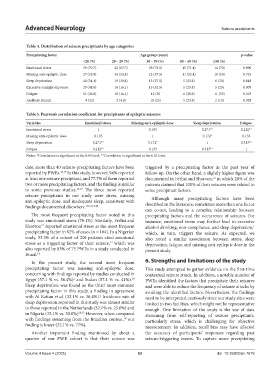
            Table 4. Distribution of seizure precipitants by age categories
            Precipitating factor                             Age group (years)                          p‑value
                                    <20 (%)      20 – 29 (%)   30 – 39 (%)    40 – 49 (%)   ≥50 (%)
            Emotional stress        29 (70.7)     42 (67.7)     29 (72.5)      15 (71.4)    14 (70)     0.990
            Missing anti-epileptic dose  27 (65.9)  34 (54.8)   23 (57.5)      11 (52.4)    10 (50)     0.733
            Sleep deprivation       14 (34.1)     19 (30.6)     15 (37.5)      5 (23.8)      6 (30)     0.848
            Excessive sunlight exposure  20 (48.8)  10 (16.1)   13 (32.5)      5 (23.8)      5 (25)     0.009
            Fatigue                 11 (26.8)     10 (16.1)      12 (30        6 (28.6)     11 (55)     0.019
            Auditory stimuli         9 (22)       3 (4.8)        10 (25)       5 (23.8)      2 (10)     0.028


            Table 5. Pearson’s correlation coefficient for precipitants of epileptic seizures
            Variables                Emotional stress    Missing anti‑epileptic dose  Sleep deprivation  Fatigue
            Emotional stress               1                    0.105                  0.271**         0.212**
            Missing anti-epileptic dose  0.105                    1                    0.172*           0.135
            Sleep deprivation            0.271**                0.172*                   1             0.313**
            Fatigue                      0.212**                0.135                  0.313**           1
            Notes: *Correlation is significant at the 0.05 level; **Correlation is significant at the 0.01 level.

            date, more than 40 seizure-precipitating factors have been   triggered by a precipitating factor in the past year of
            reported by PWEs. 10,19  In this study, however, 94% reported   follow-up. On the other hand, a slightly higher figure was
            at least one seizure precipitant, and 77.7% of them reported   documented in Ferlisi and Shorvon,  in which 28% of the
                                                                                            21
            two or more precipitating factors, and the finding is similar   patients claimed that 100% of their seizures were related to
            to some previous studies. 12,19  The three most reported   some precipitant factors.
            seizure precipitants in our study were stress, missing   Although many precipitating factors have been
            anti-epileptic dose, and inadequate sleep, consistent with   described in the literature, sometimes more than one factor
            findings documented elsewhere. 10,12,15,20
                                                               can co-act, leading to a complex relationship between
              The most frequent precipitating factor noted in this   precipitating factors and the occurrence of seizures. For
            study was emotional stress (70.1%). Similarly, Ferlisi and   instance, emotional stress may further lead to excessive
            Shorvon  reported emotional stress as the most frequent   alcohol drinking, non-compliance, and sleep deprivation,
                   21
                                                                                                             1
            precipitating factor in 82% of cases (n = 104). In a Nigerian   which, in turn, triggers the seizure. As expected, we
            study, 53.3% of a cohort of 210 patients cited emotional   also noted a similar association between stress, sleep
            stress as a triggering factor of their seizure,  which was   deprivation, fatigue, and missing anti-epileptic dose in the
                                                12
            also reported by 83% of 75 PWEs in a study conducted in   present study.
            Brazil. 18
              In  the  present  study,  the  second  most  frequent   6. Strengths and limitations of the study
            precipitating factor was missing anti-epileptic dose,   This study attempted to gather evidence on the first-time
            concurring with findings reported by studies conducted in   contextual seizure attack. In addition, a notable number of
            Egypt (57.1 % vs. 56.4%)  and Sudan (57.1 % vs. 41%).    PWEs identified the factors that precipitate their seizures
                                                         14
                                1
            Sleep deprivation was found as the third most common   and were able to reduce the frequency of seizure attacks by
            precipitating factor in this study, a finding in agreement   avoiding the identified factors. Nevertheless, the findings
            with Al Kattan et al. (32.1% vs. 36.4%).  Incidence rate of   need to be interpreted cautiously since our study sites were
                                            1
            sleep deprivation reported in this study was almost similar   limited to two facilities, which might not be representative
            to those reported in the Netherlands (32.1% vs. 25.0%) and   enough. One limitation of the study is the use of data
            in Nigeria (32.1% vs. 30.0%) 10,13  However, when compared   stemming  from  self-reporting  of  seizure  precipitants,
            with findings stemming from the Brazilian context,  our   particularly stress, which is challenging for objective
                                                      18
            finding is lower (32.1% vs. 77%).                  measurement. In addition, recall bias may have affected
              Another important finding mentioned by about a   the accuracy of participants’ responses regarding past
            quarter of our PWE cohort is that their seizure was   seizure-triggering events. To capture more precipitating


            Volume 4 Issue 4 (2025)                         63                               doi: 10.36922/an.7679

