


Page 64 - ARNM-1-1
P. 64
Advances in Radiotherapy
            & Nuclear Medicine                                                  PRaG therapy for renal pelvis carcinoma


            advantages in numerous case series [9-12] . In addition,   Rechallenge is a moderately infrequent therapeutic
            there is currently inadequate evidence to support the use   approach in the clinical management of RPC. This is
            of effective treatment options for patients who undergo   especially the case when conventional therapies have
            disease progression after ceasing anti-PD-1 therapy.  already been exhausted. In 2018, Hakozaki et al. reported
                                                               a case of an advanced non-small-cell lung cancer (NSCLC)
                                                               patient who had previously received an ICI alongside
            A                                                  potent cytotoxic chemotherapy as the primary first-line
                                                               treatment. Subsequent to rechallenging the patient with
                                                               an ICI, a PR was accomplished . The report highlighted
                                                                                        [13]
                                                               the prospective clinical effectiveness of an ICI rechallenge
                                                               strategy in patients who undergo disease progression
                                                               after accomplishing an initial response to the same agent.
                                                               However, it is crucial to acknowledge that these instances
                                                               are moderately rare. Furthermore, the efficiency of
            B                                                  rechallenge with the same PD-1 inhibitor in other tumor
                                                               types is ambiguous. The study conducted by Leighl et al.
                                                               in 2021 revealed that the amalgamation of durvalumab
                                                               and tremelimumab exhibited negligible efficacy in patients
                                                               diagnosed with advanced squamous NSCLC (sqNSCLC),
                                                               who encountered disease progression subsequent to
                                                               previous anti-PD-1 therapy . Consequently, the optimal
                                                                                     [14]
            C                                                  strategy to administer rechallenge therapy remains
                                                               ambiguous.
                                                                 Radiotherapy, traditionally regarded as a local
                                                               treatment, has recently been discovered to be a modulator
                                                               of immunotherapy. In 2018, Asna  et al. reported that
                                                               radiation therapy holds the potential to enhance anti-
                                                               cancer immune responses by triggering a switch from an
                                                               immune-excluded (“cold”) pattern to an inflammatory
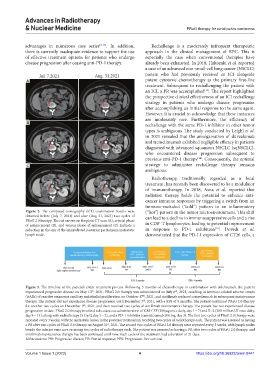
            Figure  2.  The computed tomography (CT) examination results were   (“hot”) pattern in the tumor microenvironment. This shift
            obtained before (July 7, 2021) and after (Aug 31, 2021) two cycles  of   can lead to a decline in immunosuppressive cells and a rise
            PRaG 2.0 therapy. The red arrows on the plain CT scan (A), arterial phase   +
            of enhancement (B), and venous phase of enhancement (C) indicate a   in CD8  T lymphocytes, leading to potential improvement
                                                                                            [15]
            reduction in the size of the unirradiated posterior peritoneum metastatic   in response to PD-1 inhibition . Dovedi  et al.
            lymph node.                                        demonstrated that the PD-L1 expression of CT26 cells, a


            Figure 3. The timeline of the patient’s entire treatment process. Following 3 months of chemotherapy in combination with tislelizumab, the patient
            experienced progressive disease on May 13 , 2021. PRaG 2.0 therapy was administered on July 6 , 2021, resulting in immune-related adverse events
                                                                            th
                                        th
            (irAEs) of reactive cutaneous capillary endothelial proliferation on October 17 , 2021, and sintilimab replaced camrelizumab in subsequent maintenance
                                                              th
            therapy. The patient did not experience disease progression until December 7 , 2021, with a PFS of 5 months. The patient continued PRaG 2.0 therapy
                                                              th
            for another two cycles on December 9 , 2021, and then received two cycles of sintilimab maintenance therapy. The patient has not experienced disease
                                     th
            progression to date. PRaG 2.0 therapy involved subcutaneous administration of GM-CSF (200 µg once daily, day 1 – 7) and IL-2 (200 million UI once daily,
            day 8 – 14), along with radiotherapy (5 Gy/d, day 1 – 2), and a PD-1 inhibitor (camrelizumab 200 mg, day 3). The first two cycles of PRaG 2.0 therapy were
            repeated every 3 weeks, with the metastatic lesion in the posterior peritoneum receiving two cycles of radiotherapy each. The patient was assessed as having
            a PR after two cycles of PRaG 2.0 therapy on August 31 , 2021. The second two cycles of PRaG 2.0 therapy were repeated every 3 weeks, with lymph nodes
                                               st
            beside the inferior vena cava receiving two cycles of radiotherapy each. The patient was assessed as having a PR after two cycles of PRaG 2.0 therapy, and
            sintilimab maintenance therapy has been continued until now. Each cycle of the treatment had a duration of 21 days.
            Abbreviations: PD: Progressive disease; PR: Partial response; PFS: Progression-free survival.
            Volume 1 Issue 1 (2023)                         4                       https://doi.org/10.36922/arnm.0441

