


Page 63 - ARNM-1-1
P. 63
Advances in Radiotherapy
            & Nuclear Medicine                                                  PRaG therapy for renal pelvis carcinoma


                         A


                         B


                         C


                         D


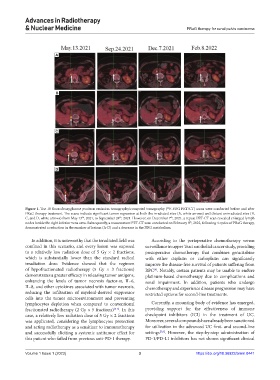
            Figure 1. The 18 fluorodeoxyglucose positron emission tomography/computed tomography ( F-FDG PET/CT) scans were conducted before and after
                                                                        18
            PRaG therapy treatment. The scans indicate significant tumor regression at both the irradiated sites (A, white arrows) and distant unirradiated sites (B,
            C, and D, white arrows) from May 13 , 2021, to September 24 , 2021. However, on December 7 , 2021, a repeat PET-CT scan revealed enlarged lymph
                                    th
                                                                          th
                                                    th
            nodes beside the right inferior vena cava. Subsequently, a reassessment PET-CT scan conducted on February 8 , 2022, following 4 cycles of PRaG therapy,
                                                                                  th
            demonstrated a reduction in the number of lesions (A-D) and a decrease in the FDG metabolism.
              In addition, it is noteworthy that the irradiated field was   According to the perioperative chemotherapy versus
            confined in this scenario, and every lesion was exposed   surveillance in upper Tract urothelial cancer study, providing
            to a relatively low radiation dose of 5  Gy × 2 fractions,   postoperative chemotherapy that combines gemcitabine
            which is substantially lower than the standard radical   with either cisplatin or carboplatin can significantly
            irradiation dose. Evidence  showed  that the  regimen   improve the disease-free survival of patients suffering from
            of hypofractionated radiotherapy (5  Gy × 3 fractions)   RPC . Notably, certain patients may be unable to endure
                                                                  [6]
            demonstrates a greater efficacy in releasing tumor antigens,   platinum-based chemotherapy due to complications and
            enhancing the levels of tumor necrosis factor-α, IL-6,   renal impairment. In  addition, patients  who  undergo
            IL-8, and other cytokines associated with tumor necrosis,   chemotherapy and experience disease progression may have
            reducing  the  infiltration  of  myeloid-derived  suppressor   restricted options for second-line treatments.
            cells into the tumor microenvironment and preventing
            lymphocytes  depletion  when  compared  to  conventional   Currently, a mounting body of evidence has emerged,
            fractionated radiotherapy (2 Gy × 5 fractions) [3-5] . In this   providing support for the effectiveness of immune
            case, a relatively low radiation dose of 5 Gy × 2 fractions   checkpoint inhibitors (ICI) in the treatment of UC.
            was applicated, considering the lymphocytes protection   Moreover, several compounds have already been sanctioned
            and acting radiotherapy as a sensitizer to immunotherapy   for utilization in the advanced UC first- and second-line
            and successfully eliciting a systemic antitumor effect for   settings [7,8] . However, the step-by-step administration of
            this patient who failed from previous anti-PD-1 therapy.  PD-1/PD-L1 inhibitors has not shown significant clinical


            Volume 1 Issue 1 (2023)                         3                       https://doi.org/10.36922/arnm.0441

