


Page 12 - ARNM-2-3
P. 12
Advances in Radiotherapy
            & Nuclear Medicine                                   Integrating pet nutrition with radiotherapy and nuclear medicine


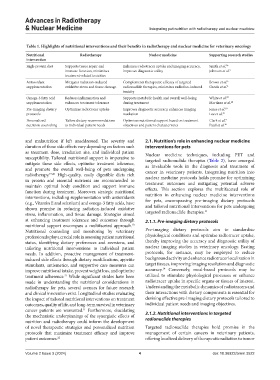
            Table 1. Highlights of nutritional interventions and their benefits in radiotherapy and nuclear medicine for veterinary oncology
            Nutritional            Radiotherapy                 Nuclear medicine          Supporting research studies
            intervention
            High-protein diet  Supports tissue repair and   Enhances radiotracer uptake and imaging accuracy,   Smith et al. 26
                             immune function, minimizes   improves diagnostic utility     Johnson et al. 9
                             treatment-related toxicities
            Antioxidant      Mitigates radiation-induced   Complements therapeutic efficacy of targeted   Brown et al. 2
            supplementation  oxidative stress and tissue damage  radionuclide therapies, minimizes radiation-induced   Garcia et al. 6
                                                     toxicity
            Omega-3 fatty acid   Reduces inflammation and   Supports metabolic health and overall well-being   White et al. 27
            supplementation  enhances treatment tolerance  during treatment               Martinez et al. 28
            Pre-imaging dietary   Optimizes radiotracer uptake  Improves diagnostic accuracy, enhances imaging   Jones et al. 10
            protocols                                resolution                           Lee et al. 29
            Personalized     Tailors dietary recommendations   Optimizes nutritional support based on treatment   Clark et al. 5
            nutrition counseling  to individual patient needs  objectives and patient characteristics  Patel et al. 30


            and malnutrition if left unaddressed. The severity and   2.1. Nutrition’s role in enhancing nuclear medicine
            duration of these side effects vary depending on factors such   interventions for pets
            as treatment dose, irradiation site, and individual patient   Nuclear medicine techniques, including PET and
            susceptibility. Tailored nutritional support is imperative to   targeted radionuclide therapies (Table  2), have emerged
            mitigate these side effects, optimize treatment tolerance,   as invaluable tools in the diagnosis and treatment of
            and promote the overall well-being of pets undergoing   cancer in veterinary patients. Integrating nutrition into
            radiotherapy. 19,20  High-quality, easily  digestible diets  rich   nuclear medicine protocols holds promise for optimizing
            in  protein  and  essential  nutrients  are  recommended  to   treatment outcomes and mitigating potential adverse
            maintain  optimal  body  condition and  support  immune   effects. This section explores the multifaceted role of
            function during treatment. Moreover, strategic nutritional   nutrition  in  enhancing  nuclear  medicine  interventions
            interventions, including supplementation with antioxidants   for pets, encompassing pre-imaging dietary protocols
            (e.g., Vitamin E and selenium) and omega-3 fatty acids, have
            shown promise in reducing radiation-induced oxidative   and tailored nutritional interventions for pets undergoing
                                                                                        13
            stress,  inflammation, and  tissue  damage. Strategies  aimed   targeted radionuclide therapies.
            at enhancing treatment tolerance and outcomes through   2.1.1. Pre-imaging dietary protocols
            nutritional support encompass a multifaceted approach.
                                                         10
            Nutritional counseling and monitoring by veterinary   Pre-imaging dietary protocols aim to standardize
            professionals play a crucial role in assessing patient nutritional   physiological conditions and optimize radiotracer uptake,
            status,  identifying dietary preferences  and aversions, and   thereby improving the accuracy and diagnostic utility of
            tailoring nutritional interventions to individual patient   nuclear imaging studies in veterinary oncology. Fasting
            needs. In addition, proactive management of treatment-  protocols, for instance, may be employed to reduce
            induced side effects through dietary modifications, appetite   background activity and enhance radiotracer localization in
            stimulants, antiemetics, and supportive care measures can   target tissues, improving imaging resolution and diagnostic
                                                                      14
            improve nutritional intake, prevent weight loss, and optimize   accuracy.   Conversely,  meal-based  protocols may be
            treatment adherence.  While significant strides have been   utilized to stimulate physiological processes or enhance
                            21
            made in understanding the nutritional considerations in   radiotracer uptake in specific organs or tissues of interest.
            radiotherapy for pets, several avenues for future research   Understanding the metabolic dynamics of radiotracers and
            and clinical innovation exist. Longitudinal studies evaluating   their interactions with dietary components is essential for
            the impact of tailored nutritional interventions on treatment   devising effective pre-imaging dietary protocols tailored to
            outcomes, quality of life, and long-term survival in veterinary   individual patient needs and imaging objectives.
            cancer patients are warranted.  Furthermore, elucidating   2.1.2. Nutritional interventions in targeted
                                    11
            the mechanistic underpinnings of the synergistic effects of   radionuclide therapies
            nutrition and radiotherapy could inform the development
            of novel therapeutic strategies and personalized nutrition   Targeted radionuclide therapies hold promise in the
            protocols that maximize treatment efficacy and improve   management of certain cancers in veterinary patients,
            patient outcomes. 22                               offering localized delivery of therapeutic radiation to tumor


            Volume 2 Issue 3 (2024)                         4                              doi: 10.36922/arnm.3522

