


Page 107 - ARNM-3-1
P. 107
Advances in Radiotherapy
            & Nuclear Medicine                                                 Role of 18F-FDG in brown tumor detection


                         A                                   B


                                                             C


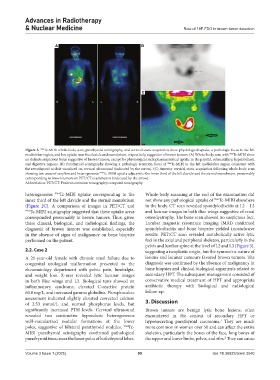
            Figure 2.  99m Tc-MIBI whole-body scan, parathyroid scintigraphy, and cervical static acquisition show physiological uptake, a pathologic focus in the left
            mediolobar region, and low uptake near the clavicle and manubrium, respectively, suggestive of brown tumors. (A) Whole-body scan with  Tc-MIBI show
                                                                                                   99m
            no definite suspicious focus suggestive of brown tumors, except for physiological radiopharmaceutical uptake in the parotid, submaxillary, hepatobiliary,
            and digestive regions. (B) Parathyroid scintigraphy showing a pathologic retention focus of   99m Tc-MIBI in the left mediolobar region consistent with
            the retrothyroid nodule visualized on cervical ultrasound (indicated by the arrow). (C) Anterior cervical static acquisition following whole-body scan
            showing two areas of very low and heterogeneous  Tc-MIBI uptake adjacent to the inner third of the left clavicle and the sternal manubrium, presumably
                                           99m
            corresponding to brown tumors on PET/CT examination (indicated by the arrow).
            Abbreviation: PET/CT: Positron emission tomography/computed tomography.

            heterogeneous   99m Tc-MIBI uptake corresponding to the   Whole-body scanning at the end of the examination did
                                                                                            99m
            inner third of the left clavicle and the sternal manubrium   not show any pathological uptake of  Tc-MIBI elsewhere
            (Figure  2C). A  comparison of images in PET/CT and   in the body. CT scan revealed spondylodiscitis at L2 – L3
            99m Tc-MIBI scintigraphy suggested that these uptake areas   and lacunar images in both iliac wings suggestive of renal
            corresponded presumably to brown tumors. Thus, given   osteodystrophy. The bone scan showed no suspicious foci.
            these  clinical, biological, and radiological findings,  the   Lumbar  magnetic  resonance  imaging  (MRI)  confirmed
            diagnosis of brown tumors was established, especially   spondylodiscitis and bone biopsies yielded inconclusive
            in  the  absence  of  signs  of  malignancy  on  bone  biopsies   results. PET/CT scan revealed metabolically active lytic
            performed on the patient.                          foci in the axial and peripheral skeleton, particularly in the
                                                               pelvis and lumbar spine at the level of L2 and L3 (Figure 3),
            2.2. Case 2                                        suggesting a neoplastic origin, but the symmetric nature of
            A 21-year-old female with chronic renal failure due to   lesions and lacunar contours favored brown tumors. The
            congenital urological malformation presented to the   diagnosis was confirmed by the absence of malignancy in
            rheumatology department with pelvic pain, lumbalgia,   bone biopsies and clinical-biological arguments related to
            and weight loss. X-rays revealed lytic lacunar images   secondary HPT. The subsequent management consisted of
            in both  iliac wings  and L3. Biological tests  showed an   conservative medical treatment  of HPT  and appropriate
            inflammatory syndrome, elevated C-reactive protein   antibiotic therapy with biological and radiological
            60.8 mg/L, and increased gamma globulins. Phosphocalcic   follow-up.
            assessment indicated slightly elevated corrected calcium
            of 2.53  mmol/L and normal phosphorus levels, but   3. Discussion
            significantly increased PTH levels. Cervical ultrasound   Brown tumors are benign lytic bone lesions, often
            revealed two centimetric hypoechoic heterogeneous   encountered in the context of secondary HPT or
            well-vascularized nodular formations at the lower   hypersecreting  parathyroid  carcinoma.   They  are  much
                                                                                               1
            poles,  suggestive  of  bilateral  parathyroid  nodules.   99m Tc-  more common in women over 50 and can affect the entire
            MIBI parathyroid scintigraphy confirmed pathological   skeleton, particularly the bones of the face, long bones of
            parathyroid tissue near the lower poles of both thyroid lobes.   the upper and lower limbs, pelvis, and ribs.  They can cause
                                                                                                 2

            Volume 3 Issue 1 (2025)                         99                             doi: 10.36922/arnm.3540

