


Page 40 - ARNM-3-1
P. 40
Advances in Radiotherapy
            & Nuclear Medicine                                                 EZH2 inhibition in ARID1A-deficient TNBC


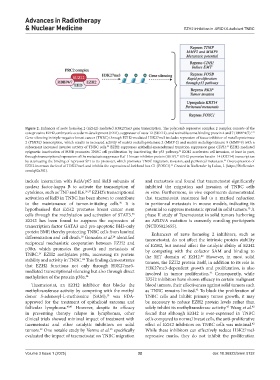
            Figure 2. Enhancer of zeste homolog 2 (EZH2)-mediated H3K27me3 gene transcription. The polycomb repressive complex 2 complex consists of the
            core proteins EZH2, embryonic ectoderm development (EED), suppressor of zeste 12 (SUZ12), and retinoblastoma binding protein 4 and 7 (RBBP4/7).
                                                                                                            122
            Gene silencing in triple-negative breast cancer (TNBC) through EZH2-mediated H3K27me3 includes repression of tissue inhibitor of metalloproteinase
            2 (TIMP2) transcription, which results in increased activity of matrix metalloproteinase 2 (MMP-2) and matrix metalloproteinase 9 (MMP-9) with a
            subsequent increased invasive activity of TNBC cells.  EZH2 suppresses epithelial-mesenchymal transition suppressor gene CDH1.  EZH2-mediated
                                                                                                 31
                                               22
            epigenetic inactivation of FOSB promotes TNBC cell proliferation by inactivating the p53 pathway.  EZH2 accelerates cell invasion, at least in part,
                                                                             32
            through transcriptional repression of the metastasis suppressor Raf-1 kinase inhibitor protein (RKIP).  EZH2 promotes keratin-14 (KRT14) transcription
                                                                            31
            by attenuating the binding of repressor SP1 to its promoter, which promotes TNBC migration, invasion, and peritoneal metastasis.  Overexpression of
                                                                                                35
            EZH2 increases the level of H3K27me3 and inhibits the expression of forkhead box C1 (FOXC1).  Created in BioRender by Lukas, L (https://BioRender.
                                                                          33
            com/q82a381).
            include interaction with RelA/p65 and RelB subunits of   and metastasis and found that tazemetostat significantly
            nuclear factor-kappa B to activate the  transcription of   inhibited the migration and invasion of TNBC cells
            cytokines, such as TNF and IL6. 36,37  EZH2’s transcriptional   in vitro. Furthermore, in vivo experiments demonstrated
            activation of RelB in TNBC has been shown to contribute   that tazemetostat treatment led to a marked reduction
            to the maintenance of tumor-initiating cells.  It is   in peritoneal metastasis in mouse models, indicating its
                                                    36
            hypothesized that EZH2 promotes breast cancer stem   potential to suppress metastatic spread in solid tumors.  A
                                                                                                          35
            cells through the methylation and activation of STAT3.    phase II study of Tazemetostat in solid tumors harboring
                                                         36
            EZH2 has been found to suppress the expression of   an  ARID1A  mutation is  currently enrolling participants
            transcription factor GATA3 and pro-apoptotic BH3-only   (NCT05023655).
            protein BMF, thereby protecting TNBC cells from luminal   Enhancers of zeste homolog 2 inhibitors, such as
            differentiation and cell death.  Gonzalez et al.  identified   tazemetostat,  do  not  affect  the  intrinsic  protein  stability
                                                 24
                                   38
            reciprocal mechanistic cooperation between EZH2 and   of EZH2, but instead affect the catalytic ability of EZH2
            p38α, which promotes the growth and metastasis of   by  competing  with  the  cofactor  SAM  and binding  to
            TNBC.  EZH2 methylates p38a, increasing its protein   the SET domain of EZH2.  However, in most solid
                  24
                                                                                      42
            stability and activity in TNBC.  This finding demonstrates   tumors, the EZH2 protein itself, in addition to its role in
                                    24
            that  EZH2 functions  not only  through  H3K27me3-  H3K27me3-dependent growth and proliferation, is also
            mediated transcriptional silencing but also through direct   involved in tumor proliferation.  Consequently, while
                                                                                          42
            methylation of the protein p38a. 24                EZH2 inhibitors have shown efficacy in certain malignant
              Tazemetostat, an EZH2 inhibitor that blocks the   blood tumors, their effectiveness against solid tumors such
            methyltransferase activity by competing with the methyl   as TNBC remains limited.  To block the proliferation of
                                                                                    42
            donor S-adenosyl-L-methionine (SAM),  was FDA-     TNBC  cells  and  inhibit  primary  tumor  growth,  it may
                                              39
            approved for the treatment of epithelioid sarcoma and   be necessary to reduce EZH2 protein levels rather than
            follicular lymphoma. 40,41  However, despite its efficacy   solely inhibit its methyltransferase activity.  Wang et al.
                                                                                                 43
                                                                                                            42
            in  preventing  therapy  relapse in  lymphomas,  other   found that although EZH2 is over-expressed in TNBC
            clinical trials showed minimal impact of treatment with   cells compared to normal breast cells, the anti-proliferative
            tazemetostat and other catalytic inhibitors on solid   effect of EZH2 inhibitors on TNBC cells was minimal.
                                                                                                            42
            tumors.  One notable study by Verma et al.  specifically   While these inhibitors can effectively reduce H3K27me3
                  42
                                                35
            evaluated the impact of tazemetostat on TNBC migration   repressive  marks,  they  do  not  inhibit  the  proliferation
            Volume 3 Issue 1 (2025)                         32                             doi: 10.36922/arnm.5132

