


Page 67 - ARNM-3-1
P. 67
Advances in Radiotherapy
            & Nuclear Medicine                                                        Aspirin’s protective effect on RISI


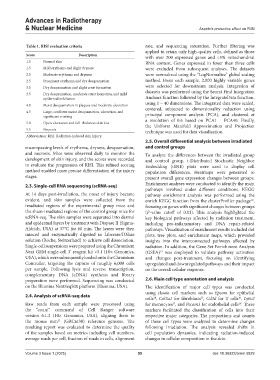
            Table 1. RISI evaluation criteria                  rate, and sequencing saturation. Further filtering was
                                                               applied to retain only high-quality cells, defined as those
            Score                 Description                  with over 200 expressed genes and <5% mitochondrial
            1.0    Normal skin                                 RNA content. Genes expressed in fewer than three cells
            1.5    Mild erythema and slight dryness            were excluded from subsequent analyses. The datasets
            2.0    Moderate erythema and dryness               were normalized using the “LogNormalize” global scaling
            2.5    Prominent erythema and dry desquamation     method. From each sample, 2,000 highly variable genes
            3.0    Dry desquamation and slight crust formation  were selected for downstream analysis. Integration of
            3.5    Dry desquamation, moderate crust formation, and mild   datasets was performed using the Seurat Find Integration
                   epidermal exfoliation                       Anchors function followed by the IntegrateData function,
                                                               using 1 – 40 dimensions. The integrated data were scaled,
            4.0    Moist desquamation in plaques and moderate ulceration
            4.5    Large, confluent moist desquamation, ulceration, and   centered, subjected to dimensionality reduction using
                   significant crusting                        principal component analysis (PCA), and clustered at
            5.0    Open ulceration and full-thickness skin loss  a resolution of 0.6 based on PCA1 – PCA40. Finally,
                                                               the Uniform Manifold Approximation and Projection
            5.5    Necrosis                                    technique was used for data visualization.
            Abbreviation: RISI: Radiation-induced skin injury.
                                                               2.5. Overall differential analysis between irradiated
            encompassing levels of erythema, dryness, desquamation,   and control groups
            and necrosis. Mice were observed daily to monitor the   To analyze the differences between the irradiated group
            development of skin injury, and the scores were recorded   and control group, t-Distributed Stochastic Neighbor
            to evaluate the progression of RISI. This refined scoring   Embedding (tSNE) plots were used to display cell
            method enabled more precise differentiation of the injury   population differences. Heatmaps were generated to
            stages.                                            present overall gene expression changes between groups.

            2.3. Single-cell RNA sequencing (scRNA-seq)        Enrichment analyses were conducted to identify the main
                                                               pathways  involved  under  different  conditions.  KEGG
            At 14  days post-irradiation, the onset of injury became   pathway enrichment analysis was performed using the
            evident, and skin samples were collected from the   enrich KEGG function from the clusterProfiler package ,
                                                                                                            12
            irradiated  regions  of  the  experimental  group  mice  and   focusing on genes with significant changes between groups
            the sham-irradiated regions of the control group mice for   (P-value cutoff of 0.01). This analysis highlighted the
            scRNA-seq. The skin samples were separated into dermal   key biological pathways affected by radiation treatment,
            and epidermal layers by treatment with Dispase II (Sigma-  including pro-inflammatory and DNA repair-related
            Aldrich, USA) at 37°C for 60 min. The layers were then   pathways. Visualization of enrichment results included dot
            minced and enzymatically digested in Liberase/DNase   plots, tree plots, and enrichment maps, which provided
            solution (Roche, Switzerland) to achieve cell dissociation.   insights into the interconnected pathways affected by
            Single-cell suspensions were prepared using the Chromium   radiation. In addition, the Gene Set Enrichment Analysis
            Next GEM single-cell 3’ reagent kit v3.1 (10× Genomics,   (GSEA)  was employed to validate pathway activation
                                                                     13
            USA), which were subsequently loaded onto the Chromium   and changes post-treatment, focusing on identifying
            Controller, targeting the capture of roughly 6,000  cells   upregulated and downregulated pathways and their impact
            per sample. Following lysis and reverse transcription,   on the overall cellular response.
            complementary DNA (cDNA) synthesis and library
            preparation were performed. Sequencing was conducted   2.6. Main cell type annotation and analysis
            on the Illumina NextSeq500 platform (Illumina, USA).  The identification of major cell types was conducted
                                                               using classic cell markers such as  Epcam for epithelial
            2.4. Analysis of scRNA-seq data
                                                               cells ,  Col3a1 for fibroblasts ,  Cd3d  for T cells ,  Ly6c2
                                                                                      15
                                                                  14
                                                                                                      16
            Raw reads from each sample were processed using    for monocytes , and Pecam1 for endothelial cells . These
                                                                          17
                                                                                                       18
            the “count” command of Cell Ranger software        markers  facilitated  the  classification  of  cells  into  their
            version  6.1.2  (10× Genomics, USA), aligning them to   respective major categories. The proportions and counts
            the mouse  mm  (GRCm38)  reference genome. The     of these cell types were analyzed to determine changes
                          11
            resulting report was evaluated to determine the quality   following irradiation. The analysis revealed shifts in
            of the samples based on metrics including cell numbers,   cell  population dynamics,  indicating radiation-induced
            average reads per cell, fraction of reads in cells, alignment   changes in cellular composition in the skin.
            Volume 3 Issue 1 (2025)                         59                             doi: 10.36922/arnm.5829

