


Page 72 - ARNM-3-1
P. 72
Advances in Radiotherapy
            & Nuclear Medicine                                                        Aspirin’s protective effect on RISI


            A                          B                             E                   F


                                                                     G                   H


            C                          D


             I                                           J


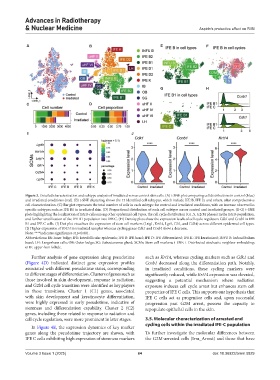
            Figure 3. Detailed characterization and subtype analysis of irradiated versus control skin cells. (A) t-SNE plot comparing cell distributions in control (blue)
            and irradiated conditions (red). (B) t-SNE clustering shows the 13 identified cell subtypes, which include IFE B, IFE D, and others, after comprehensive
            cell characterization. (C) Bar plot represents the total number of cells in each subtype for control and irradiated conditions, with an increase observed in
            specific subtypes such as IFE B1 in irradiated skin. (D) Proportional distribution of each cell subtype across control and irradiated groups. (E-G) t-SNE
            plots highlighting the localization of IFE B cells among other epidermal cell types, the cell cycle distribution (G1, S, G2/M phases) in the IFE B population,
            and further stratification of the IFE B1 population into IFE C. (H) Density plots show the expression levels of cell cycle regulators Cdk1 and Ccnb1 in IFE
            B1 and IFE C cells. (I) Dot plot visualizes the expression of stem cell markers (Lrig1, Krt14, Lgr5, Gli1, and Cd34) across different epidermal cell types.
            (J) Higher expression of Krt14 in irradiated samples whereas cycling genes Cdk1 and Ccnb1 show a decrease.
            Note: ****indicates significance at p<0.001.
            Abbreviations: IB: Inner bulge; IFE: Interfollicular epidermis; IFE B: IFE basal; IFE D: IFE differentiated; IFE K: IFE keratinized; INFU B: Infundibulum
            basal; LH: Langerhans cells; OB: Outer bulge; SG: Subcutaneous gland; SCMs: Stem cell markers; t-SNE: t-Distributed stochastic neighbor embedding;
            uHF: upper-hair follicle.

              Further analysis of gene expression along pseudotime   such as Krt14, whereas cycling markers such as Cdk1 and
            (Figure  4D) indicated distinct gene expression profiles   Ccnb1 decreased along the differentiation path. Notably,
            associated with different pseudotime states, corresponding   in irradiated conditions, these cycling markers were
            to different stages of differentiation. Clusters of genes such as   significantly reduced, while Krt14 expression was elevated,
            those involved in skin development, response to radiation,   suggesting  a  potential  mechanism  where  radiation
            and G2M cell cycle transition were identified as key players   exposure induces cell cycle arrest but enhances stem cell
            in these transitions. Cluster 1 (C1) genes, associated   properties of IFE C cells. This supports our hypothesis that
            with  skin  development  and  keratinocyte  differentiation,   IFE C cells act as progenitor cells and, upon successful
            were highly expressed in early pseudotime, indicative of   progression  past  G2M  arrest,  possess  the  capacity  to
            stemness and differentiation capability. Cluster 2 (C2)   repopulate epithelial cells in the skin.
            genes, including those related to response to radiation and
            cell cycle regulation, were more prominent in later stages.  3.5. Molecular characterization of arrested and
                                                               cycling cells within the irradiated IFE-C population
              In Figure 4E, the expression dynamics of key marker
            genes along the pseudotime trajectory are shown, with   To further investigate the molecular differences between
            IFE C cells exhibiting high expression of stemness markers   the G2M-arrested cells (Irra_Arrest) and those that have


            Volume 3 Issue 1 (2025)                         64                             doi: 10.36922/arnm.5829

