


Page 73 - ARNM-3-1
P. 73
Advances in Radiotherapy
            & Nuclear Medicine                                                        Aspirin’s protective effect on RISI


            A                                 B                            C


            D                                                              E


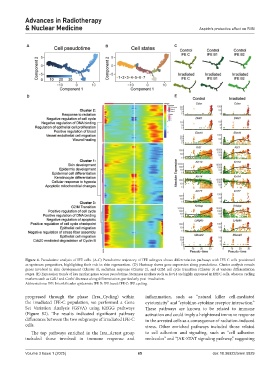
            Figure 4. Pseudotime analysis of IFE cells. (A-C) Pseudotime trajectory of IFE subtypes shows differentiation pathways with IFE C cells positioned
            as upstream progenitors, highlighting their role in skin regeneration. (D) Heatmap shows gene expression along pseudotime. Cluster analysis reveals
            genes involved in skin development (Cluster 1), radiation response (Cluster 2), and G2M cell cycle transition (Cluster 3) at various differentiation
            stages. (E) Expression trends of key marker genes across pseudotime. Stemness markers such as Krt14 are highly expressed in IFE C cells, whereas cycling
            markers such as Cdk1 and Ccnb1 decrease along differentiation, particularly post-irradiation.
            Abbreviations: IFE: Interfollicular epidermis; IFE B: IFE basal; IFE C: IFE cycling.

            progressed through the phase (Irra_Cycling) within   inflammation, such as “natural killer cell-mediated
            the irradiated IFE-C population, we performed a Gene   cytotoxicity” and “cytokine-cytokine receptor interaction.”
            Set  Variation Analysis  (GSVA)  using  KEGG  pathways   These pathways are known to be related to immune
            (Figure S2). The results indicated significant pathway   activation and could imply a heightened immune response
            differences between the two subgroups of irradiated IFE-C   in the arrested cells as a consequence of radiation-induced
            cells.                                             stress. Other enriched pathways included those related
              The top pathways enriched in the Irra_Arrest group   to cell adhesion and signaling, such as “cell adhesion
            included those involved in immune response and     molecules” and “JAK-STAT signaling pathway,” suggesting


            Volume 3 Issue 1 (2025)                         65                             doi: 10.36922/arnm.5829

