


Page 75 - ARNM-3-1
P. 75
Advances in Radiotherapy
            & Nuclear Medicine                                                        Aspirin’s protective effect on RISI


                         A


                         B                          C                        D


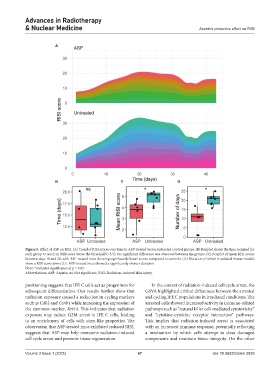
            Figure 5. Effect of ASP on RISI. (A) Trend of RISI scores over time in ASP-treated versus untreated control groups. (B) Boxplot shows the time required for
            each group to reach an RISI score above the threshold (>3.5). No significant difference was observed between the groups. (C) Boxplot of mean RISI scores
            between days 18 and 20, with ASP-treated mice showing significantly lower scores compared to controls. (D) Duration of which irradiated mouse models
            show a RISI score above 3.5. ASP-treated mice showed a significantly shorter duration.
            Note: *indicates significance at p < 0.05.
            Abbreviations: ASP: Aspirin; ns: Not significant; RISI: Radiation-induced skin injury.

            positioning suggests that IFE C cells act as progenitors for   In the context of radiation-induced cell cycle arrest, the
            subsequent differentiation. Our results further show that   GSVA highlighted critical differences between the arrested
            radiation exposure caused a reduction in cycling markers   and cycling IFE C populations in irradiated conditions. The
            such as Cdk1 and Ccnb1 while increasing the expression of   arrested cells showed increased activity in immune-related
            the stemness marker, Krt14. This indicates that radiation   pathways such as “natural killer cell-mediated cytotoxicity”
            exposure may induce G2M arrest in IFE C cells, leading   and “cytokine-cytokine  receptor  interaction”  pathways.
            to an enrichment of cells with stem-like properties. The   This implies that radiation-induced  arrest is  associated
            observation that ASP-treated mice exhibited reduced RISI,   with an increased immune response, potentially reflecting
            suggests that ASP may help overcome radiation-induced   a mechanism by which cells attempt to clear damaged
            cell cycle arrest and promote tissue regeneration.  components and maintain tissue integrity. On the other


            Volume 3 Issue 1 (2025)                         67                             doi: 10.36922/arnm.5829

