


Page 13 - ARNM-3-3
P. 13
Advances in Radiotherapy
            & Nuclear Medicine                                              Review of image-guided adaptive radiotherapy


                         A                       B                       C


                         D                       E                       F


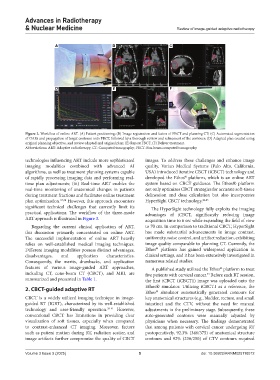
            Figure 2. Workflow of online ART. (A) Patient positioning; (B) Image registration and fusion of FBCT and planning CT; (C) Automated segmentation
            of OARs and propagation of target contours onto FBCT, followed by a thorough review and refinement of the contours; (D) Adapted plan created using
            original planning objective, and review adapted and original plan; (E) Repeat FBCT; (F) Deliver treatment.
            Abbreviations: ART: Adaptive radiotherapy; CT: Computed tomography; FBCT: Fan-beam computed tomography.

            technologies influencing ART include more sophisticated   images.  To  address  these  challenges  and  enhance  image
            imaging modalities combined with advanced AI       quality, Varian Medical Systems (Palo Alto, California,
            algorithms, as well as treatment planning systems capable   USA) introduced iterative CBCT (iCBCT) technology and
                                                                                ®
            of rapidly processing imaging data and performing real-  developed the Ethos  platform, which is an online ART
            time plan adjustments; (iii) Real-time ART enables the   system based on CBCT guidance. The Ethos® platform
            real-time monitoring of anatomical changes in patients   not only optimizes CBCT strategies for accurate soft-tissue
            during treatment fractions and facilitates online treatment   delineation and dose calculation but also incorporates
            plan optimization. 37,38  However, this approach encounters   HyperSight CBCT technology. 42,43
            significant technical challenges that currently limit its   The HyperSight technology fully exploits the imaging
            practical  applications.  The workflow of  the three-mode   advantages  of  iCBCT,  significantly  reducing  image
            ART approach is illustrated in Figure 3.           acquisition time to 6 sec while expanding the field of view
              Regarding the current clinical application of ART,   to 70 cm. In comparison to traditional CBCT, HyperSight
            this  discussion  primarily  concentrated on  online ART.   has  made substantial  advancements  in image contrast,
            The  successful  implementation  of online  ART  heavily   uniformity, noise control, and artifact reduction, exhibiting
            relies  on  well-established  medical  imaging  techniques.   image quality comparable to planning CT. Currently, the
                                                                   ®
            Different imaging modalities possess distinct advantages,   Ethos  platform has gained widespread application in
            disadvantages,  and   application  characteristics.  clinical settings, and it has been extensively investigated in
            Consequently, the merits, drawbacks, and application   numerous related studies.
            features  of  various  image-guided  ART  approaches,   A published study utilized the Ethos  platform to treat
                                                                                               ®
            including CT, cone-beam CT (CBCT), and MRI, are    five patients with cervical cancer.  Before each RT session,
                                                                                         43
            summarized and presented in Table 1.               the first iCBCT (iCBCT1) image was uploaded onto the
            2. CBCT-guided adaptive RT                         Ethos® simulator. Utilizing iCBCT1 as a reference, the
                                                               Ethos  simulator automatically generated contours for
                                                                   ®
            CBCT is a widely utilized imaging technique in image-  key anatomical structures (e.g., bladder, rectum, and small
            guided RT (IGRT), characterized by its well-established   intestine) and the CTV, without the need for manual
            technology and user-friendly operation. 39-41  However,   adjustments in the preliminary stage. Subsequently, these
            conventional CBCT has limitations in providing clear   auto-generated contours were manually adjusted by
            visualization of soft tissues, especially when compared   physicians when necessary. The findings demonstrated
            to contrast-enhanced CT imaging. Moreover, factors   that among patients with cervical cancer undergoing RT
            such as patient motion during RT, radiation scatter, and   postoperatively, 92.3% (346/375) of anatomical structure
            image artifacts further compromise the quality of CBCT   contours and 92% (230/250) of CTV contours required


            Volume 3 Issue 3 (2025)                         5                          doi: 10.36922/ARNM025110012

