


Page 14 - ARNM-3-3
P. 14
Advances in Radiotherapy
            & Nuclear Medicine                                              Review of image-guided adaptive radiotherapy


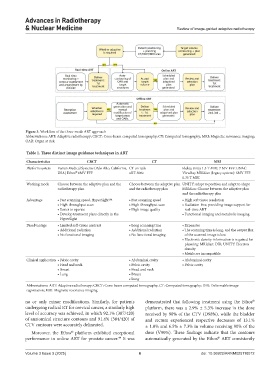
            Figure 3. Workflow of the three-mode ART approach
            Abbreviations: ART: Adaptive radiotherapy; CBCT: Cone-beam computed tomography; CT: Computed tomography; MRI: Magnetic resonance imaging;
            OAR: Organ at risk.

            Table 1. Three distinct image guidance techniques in ART
            Characteristics           CBCT                        CT                        MRI
            Platform system  Varian Medical Systems (Palo Alto, California,  CT on rails  Elekta Unity 1.5 T MRI: 7 MV FFF LINAC
                                 ®
                          USA) Ethos  6MV FFF           uRT-506c               ViewRay MRIdian (legacy system): 6MV FFF
                                                                               0.35 T MRI
            Working mode  Choose between the adaptive plan and the   Choose between the adaptive plan  UNITY: adapt to position and adapt to shape
                          radiotherapy plan             and the radiotherapy plan  MRIdian: Choose between the adaptive plan
                                                                               and the radiotherapy plan
            Advantage     • Fast scanning speed, HyperSight™  • Fast scanning speed  • High soft tissue resolution
                          • High‑throughput scan        • High‑throughput scan  •  Radiation‑free, providing image support for
                          • Easier to operate           • High image quality    real-time ART
                          •  Develop treatment plans directly in the           • Functional imaging and metabolic imaging
                           HyperSight
            Disadvantage  • Limited soft‑tissue contrast  • Long scanning time  • Expensive
                          • Additional radiation        • Additional radiation  •  The scanning time is long, and the output flux
                          • No functional imaging       • No functional imaging  of the scanned image is low
                                                                               •  Electronic density information is required for
                                                                                planning: MRIdian: DIR; UNITY: Electron
                                                                                density
                                                                               • Metals are incompatible
            Clinical application • Pelvic cavity        • Abdominal cavity     • Abdominal cavity
                          • Head and neck               • Pelvic cavity        • Pelvic cavity
                          • Breast                      • Head and neck
                          • Lung                        • Breast
                                                        • Lung
            Abbreviations: ART: Adaptive radiotherapy; CBCT: Cone-beam computed tomography; CT: Computed tomography; DIR: Deformable image
            registration; MRI: Magnetic resonance imaging.

                                                                                                            ®
            no or only minor modifications. Similarly, for patients   demonstrated that  following  treatment  using the  Ethos
            undergoing radical RT for cervical cancer, a similarly high   platform, there was a 2.9% ± 5.3% increase in the dose
            level of accuracy was achieved, in which 92.1% (387/420)   received by 98% of the CTV (D98%), while the bladder
            of anatomical structure contours and 91.4% (384/420) of   and rectum experienced respective decreases of  13.1%
            CTV contours were accurately delineated.           ± 1.0% and 6.5% ± 7.3% in volume receiving 90% of the

                               ®
              Moreover, the Ethos  platform exhibited exceptional   dose (V90%). These findings indicate that the contours
                                                                                              ®
            performance in  online ART for prostate cancer.  It  was   automatically generated by the Ethos  ART consistently
                                                   44
            Volume 3 Issue 3 (2025)                         6                          doi: 10.36922/ARNM025110012

