


Page 78 - ARNM-3-3
P. 78
Advances in Radiotherapy
            & Nuclear Medicine                                    CS@LGG for acute radiation-induced bowel injury alleviation


                         A


                         B                                 C


                         D                         E                      F


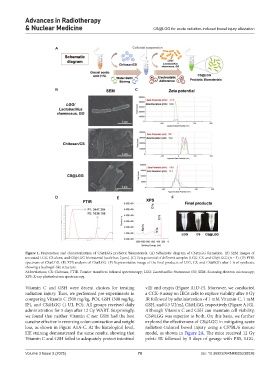
            Figure  1.  Preparation and characterization of CS@LGG probiotic biomaterials. (A)  Schematic  diagram of CS@LGG formation. (B) SEM images of
            uncoated LGG, CS alone, and CS@LGG biomaterial (scale bar, 2 μm). (C) Zeta potential of different samples (LGG, CS, and CS@LGG) (n = 3). (D) FTIR
            spectrum of CS@LGG. (E) XPS analysis of CS@LGG. (F) Representative image of the final products of LGG, CS, and CS@LGG after 1 h of synthesis,
            showing a hydrogel-like structure.
            Abbreviations: CS: Chitosan; FTIR: Fourier transform infrared spectroscopy; LGG: Lactobacillus rhamnosus GG; SEM: Scanning electron microscopy;
            XPS: X-ray photoelectron spectroscopy.

            Vitamin C and GSH were decent choices for treating   villi and crypts (Figure A1D-F). Moreover, we conducted
            radiation injury. Thus, we performed pre-experiments in   a CCK-8 assay on IEC6 cells to explore viability after 8 Gy
            comparing Vitamin C (500 mg/kg, PO), GSH (300 mg/kg,   IR followed by administration of 1 mM Vitamin C, 1 mM
            IP), and CS@LGG (1 UI, PO). All groups received daily   GSH, and 0.5 UI/mL CS@LGG, respectively (Figure A1G).
            administration for 5 days after 12 Gy WART. Surprisingly,   Although Vitamin C and GSH can maintain cell viability,
            we found that neither Vitamin C nor GSH had the best   CS@LGG was superior to both. On this basis, we further
            curative effective in reversing colon contraction and weight   explored the effectiveness of CS@LGG in mitigating acute
            loss, as shown in Figure A1A-C. At the histological level,   radiation-induced bowel injury using a C57BL/6 mouse
            HE staining demonstrated the same results, showing that   model, as shown in Figure 2A. The mice received 12 Gy
            Vitamin C and GSH failed to adequately protect intestinal   pelvic IR followed by 5  days of gavage with PBS, LGG,


            Volume 3 Issue 3 (2025)                         70                        doi: 10.36922/ARNM025230026

