


Page 79 - ARNM-3-3
P. 79
Advances in Radiotherapy
            & Nuclear Medicine                                    CS@LGG for acute radiation-induced bowel injury alleviation


                         A


                         B                 C


                         D              E                             F


                        G


                         H


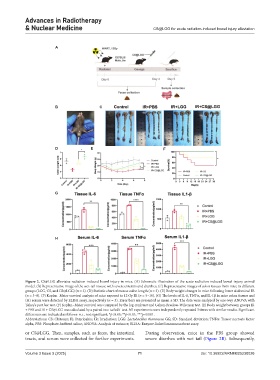
            Figure 2. CS@LGG alleviates radiation-induced bowel injury in mice. (A) Schematic illustration of the acute radiation-induced bowel injury animal
            model. (B) Representative image of the wet-tail mouse with severe enteritis and diarrhea. (C) Representative images of colon tissues from mice in different
            groups (LGG, CS, and CS@LGG) (n = 3). (D) Statistic chart of mouse colon length (n = 3). (E) Body weight changes in mice following lower abdominal IR
            (n = 3–8). (F) Kaplan−Meier survival analysis of mice exposed to 12 Gy IR (n = 5–10). (G) The levels of IL-6, TNFα, and IL-1β in mice colon tissues and
            (H) serum were detected by ELISA assay, respectively (n = 3). Error bars are presented as mean ± SD. The data were analyzed by one-way ANOVA with
            Tukey’s post hoc test. (F) Kaplan−Meier survival was compared by the log-rank test and Gehan-Breslow-Wilcoxon test. (E) Body weight between groups IR
            + PBS and IR + CS@LGG was calculated by a paired two-tailed t-test. All experiments were independently repeated 3 times with similar results. Significant
            differences are indicated as follows: n.s., not significant; *p<0.05; **p<0.01; ***p<0.001.
            Abbreviations: CS: Chitosan; IL: Interleukin; IR: Irradiation; LGG: Lactobacillus rhamnosus GG; SD: Standard deviation; TNFα: Tumor necrosis factor
            alpha; PBS: Phosphate-buffered saline; ANOVA: Analysis of variance; ELISA: Enzyme-linked immunosorbent assay.

            or CS@LGG. Then, samples, such as feces, the intestinal   During observation, mice in the PBS group showed
            tracts, and serum were collected for further experiments.   severe diarrhea with wet tail (Figure  2B). Subsequently,


            Volume 3 Issue 3 (2025)                         71                        doi: 10.36922/ARNM025230026

