


Page 81 - ARNM-3-3
P. 81
Advances in Radiotherapy
            & Nuclear Medicine                                    CS@LGG for acute radiation-induced bowel injury alleviation


                         A                                                  D


                         B                   C                              H


                         E                                                  I


                                                                            J


                         F                            G                     K


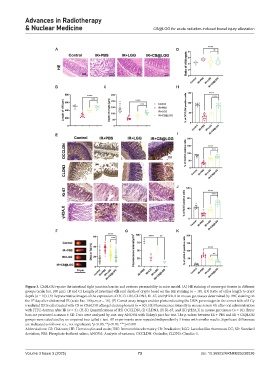
            Figure 3. CS@LGG repairs the intestinal tight junction barrier and restores permeability in mice model. (A) HE staining of mouse gut tissues in different
            groups (scale bar, 100 μm). (B and C) Length of intestinal villi and depth of crypts based on the HE staining (n = 10). (D) Ratio of villus length to crypt
            depth (n = 10). (E) Representative images of the expression of OCCLDN, CLDN3, Ki-67, and γH2A.X in mouse gut tissues determined by IHC staining on
            the 5  day after abdominal IR (scale bar, 100 μm; n = 10). (F) Comet assay images and dot plots indicating the DNA percentages in the comet tails of 8 Gy
               th
            irradiated IEC6 cells treated with CS or CS@LGG after gel electrophoresis (n = 50). (G) Fluorescence intensity in mouse serum 4 h after oral administration
            with FITC-dextran after IR (n = 3). (H-K) Quantifications of (H) OCCLDN, (I) CLDN3, (J) Ki-67, and (K) γH2A.X in mouse gut tissues (n = 10). Error
            bars are presented as mean ± SD. Data were analyzed by one-way ANOVA with Tukey’s post hoc test. The p-values between IR + PBS and IR + CS@LGG
            groups were calculated by an unpaired two-tailed t-test. All experiments were repeated independently 3 times with similar results. Significant differences
            are indicated as follows: n.s., not significant; *p<0.05; **p<0.01; ***p<0.001.
            Abbreviations: CS: Chitosan; HE: Hematoxylin and eosin; IHC: Immunohistochemistry; IR: Irradiation; LGG: Lactobacillus rhamnosus GG; SD: Standard
            deviation; PBS: Phosphate-buffered saline; ANOVA: Analysis of variance; OCCLDN: Occludin; CLDN3: Claudin-3.


            Volume 3 Issue 3 (2025)                         73                        doi: 10.36922/ARNM025230026

