


Page 90 - ARNM-3-3
P. 90
Advances in Radiotherapy
            & Nuclear Medicine                                    CS@LGG for acute radiation-induced bowel injury alleviation


            Appendix

                           A


                                                                   B


                           C                                       E


                           D                                      F


                                                                  G


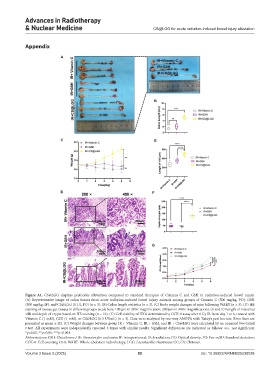
            Figure A1.  CS@LGG  displays  preferable  alleviation  compared  to  standard  therapies  of  Citamin  C  and  GSH  in  radiation-induced  bowel  injury.
            (A)  Representative  image of colon  tissues from  acute radiation-induced bowel injury  animals among  groups of Citamin  C (500  mg/kg, PO),  GSH
            (300 mg/kg, IP), and CS@LGG (1 UI, PO) (n = 3). (B) Colon length statistics (n = 3). (C) Body weight changes of mice following WART (n = 3). (D) HE
            staining of mouse gut tissues in different groups (scale bars: 100 μm in 200× magnification; 200 μm in 400× magnification). (E and F) Length of intestinal
            villi and depth of crypts based on HE staining (n = 10). (G) Cell viability of IEC6 determined by CCK-8 assay after 8 Gy IR from day 1 to 6, treated with
            Vitamin C (1 mM), GSH (1 mM), or CS@LGG (0.5 UI/mL) (n = 3). Data were analyzed by one-way ANOVA with Tukey’s post hoc test. Error bars are
            presented as mean ± SD. (C) Weight changes between group IR + Vitamin C, IR + GSH, and IR + CS@LGG were calculated by an unpaired two-tailed
            t-test. All experiments were independently repeated 3 times with similar results. Significant differences are indicated as follows: n.s., not significant;
            *p<0.05; **p<0.01; ***p<0.001.
            Abbreviations: GSH: Glutathione; HE: Hematoxylin and eosin; IP: Intraperitoneal; IR: Irradiation; OD: Optical density; PO: Per os; SD: Standard deviation;
            CCK-8: Cell counting kit-8; WART: Whole-abdomen radiotherapy; LGG: Lactobacillus rhamnosus GG; CS: Chitosan.

            Volume 3 Issue 3 (2025)                         82                        doi: 10.36922/ARNM025230026

