


Page 16 - BH-1-1
P. 16
Brain & Heart                                                      Application of the neural networks surgery


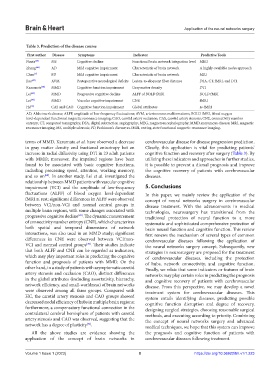
            Table 3. Prediction of the disease course
             First author  Disease  Symptoms              Indicator                   Predictive Tools
            Nauta [65]  MS        Cognitive decline      Functional brain network integration level  MEG
            Zhang [66]  AD        Mild cognitive impairment  Characteristic of brain network  A highly-available nodes approach
            Chen [7]   PD         Mild cognitive impairment  Characteristic of brain network  MRI
            Jiao [67]  AVM        Postoperative neurological deficits  Lesion-to-eloquent fiber distance  DSA, CT, fMRI, and DTI
            Kazumata [68]  MMD    Cognitive function impairment  Gray matter density  DTI
            Lei [69]   MMD        Progressive cognitive decline  ALFF of BOLD fMRI    BOLD fMRI
            Lei [70]   MMD        Vascular cognitive impairment  CNE                  fMRI
            He [71]    CAS and CAO Cognitive function impairment  Global attributes   rs-fMRI
            AD, Alzheimer’s disease; ALFF, amplitude of low-frequency fluctuations; AVM, arteriovenous malformations; BOLD fMRI, blood oxygen
            level-dependent functional magnetic resonance imaging; CAO, carotid artery occlusion; CAS, carotid artery stenosis; CNE, connectivity number
            entropy; CT, computed tomography; DSA, digital subtraction angiography; MEG, magnetoencephalography; MMD, moyamoya disease; MRI, magnetic
            resonance imaging; MS, multiple sclerosis; PD, Parkinson’s disease; rs-fMRI, resting-state functional magnetic resonance imaging.


            terms of MMD, Kazumata et al. have observed a decrease   cerebrovascular disease for disease progression prediction.
            in gray matter density and fractional anisotropy but an   Clearly, this application is vital for predicting patients’
            increase in radial diffusivity using DTI in 23 adult patients   cognitive function and recovery after surgery (Table 3). By
            with MMD; moreover, the impaired regions have been   utilizing these indicators and approaches in further studies,
            found  to  be  associated  with  basic  cognitive  functions,   it is possible to prevent a dismal prognosis and improve
            including processing speed, attention, working memory,   the cognitive recovery of patients with cerebrovascular
                    [68]
            and so on . In another study, Lei et al. investigated the   diseases.
            relationship between MMD patients with vascular cognitive
            impairment (VCI) and  the amplitude of  low-frequency   5. Conclusions
            fluctuations (ALFF) of blood oxygen level-dependent   In this paper, we mainly review the application of the
            fMRI at rest; significant differences in ALFF were observed   concept of neural networks surgery in cerebrovascular
            between VCI/non-VCI and normal control groups in   disease treatment. With the advancements in medical
            multiple brain regions, with some changes associated with   technologies,  neurosurgery  has  transitioned  from  the
            progressive cognitive decline . The dynamic measurement   traditional  protection  of  neural  function  to  a  more
                                  [69]
            of connectivity number entropy (CNE), which characterizes   systematic and sophisticated comprehensive protection of
            both spatial and temporal dimensions of network    brain neural function and cognitive function. This review
            interactions, was also used in an MMD study; significant   first renews the mechanism of several types of common
            differences in CNE were observed between VCI/non-  cerebrovascular  diseases  following  the  application  of
            VCI and normal control groups . Their studies indicate   the neural networks surgery concept. Subsequently, new
                                      [70]
            that both ALFF and CNE can be regarded as indicators,   strategies in neurosurgery are proposed for the treatment
            which may play important roles in predicting the cognitive   of cerebrovascular diseases, including the protection
            function and prognosis of patients with MMD. On the   of hubs, network connectivity,  and  cognitive function.
            other hand, in a study of patients with asymptomatic carotid   Finally, we relate that some indicators or features of brain
            artery stenosis and occlusion (CAO), distinct differences   networks may play certain roles in predicting the prognosis
            in the global attributes (including assortativity, hierarchy,   and cognitive recovery of  patients  with  cerebrovascular
            network efficiency, and small-worldness) of brain networks   disease. From this perspective, we may develop a novel
            were observed among all three groups. Compared with   treatment system for cerebrovascular diseases. This
            HC, the carotid artery stenosis and CAO groups showed   system  entails  identifying  diseases,  predicting  possible
            decreased nodal efficiency of hubs in multiple brain regions;   cognitive function disruption and degree of recovery,
            furthermore, a compensatory functional connection in the   designing surgical strategies, choosing reasonable surgical
            contralateral cerebral hemisphere of patients with carotid   methods, and executing according to priority. Combining
            artery stenosis and CAO was observed, suggesting that the   the concept of neural networks surgery and advanced
                                      [71]
            network has a degree of plasticity .               medical techniques, we hope that this system can improve
              All the above studies are evidence showing the   the prognosis and cognitive function of patients with
            application of the concept of brain networks in    cerebrovascular diseases following treatment.


            Volume 1 Issue 1 (2023)                         8                       https://doi.org/10.36922/bh.v1i1.223

