


Page 24 - BH-1-1
P. 24
Brain & Heart                                               Cerebral venous thrombosis mimicking brain tumors


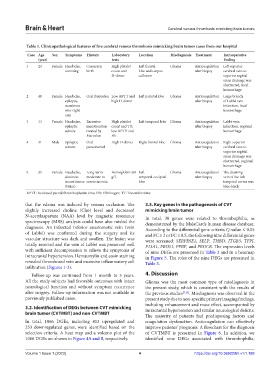
            Table 1. Clinicopathological features of five cerebral venous thrombosis mimicking brain tumor cases from our hospital
             Case Age   Sex  Symptoms  History   Laboratory   Location    Misdiagnosis  Treatment  Intraoperative
                 (year)                          tests                                          finding
            1    23    Female Headache,   Caesarean   High platelet   Left frontal   Glioma  Anticoagulation  Left superior
                             vomiting  birth    count and   lobe and corpus         after biopsy  cerebral vein to
                                                D-dimer     callosum                            superior sagittal
                                                                                                sinus drainage was
                                                                                                obstructed, focal
                                                                                                hemorrhage
            2    48    Female Headache,   Oral ibuprofen Low APTT and  Left parietal lobe  Glioma  Anticoagulation  Large branch
                             epilepsy,          high D-dimer                        after biopsy  of Labbé vein
                             numbness                                                           infarction, focal
                             over right                                                         hemorrhage
                             arm
            3    13    Female Headache,   Excessive   High platelet   Left temporal lobe  Glioma  Anticoagulation  Labbé vein
                             epileptic   menstruation   count and TT;               after biopsy  infarction, regional
                             seizure  treated by   low APTT and                                 hemorrhage
                                      Marvelon  Fib
            4    31    Male  Epileptic   Oral   High D-dimer  Right frontal lobe  Glioma  Anticoagulation  Right superior
                             seizure  paracetamol                                   after biopsy  cerebral vein to
                                                                                                superior sagittal
                                                                                                sinus drainage was
                                                                                                obstructed, regional
                                                                                                hemorrhage
            5    35    Female Headache,   Long-term   Hemoglobin<60  Left   Glioma  Anticoagulation  The draining
                             dizziness   moderate to   g/L  temporal-occipital      after biopsy  vein of the left
                             incontinence  severe anemia    lobe                                temporal cortex was
                             (twice)                                                            blue-black
            APTT: Activated partial thromboplastin time; Fib: Fibrinogen; TT: Thrombin time

            that the edema was induced by venous occlusion. The   3.3. Key genes in the pathogenesis of CVT
            slightly increased choline (Cho) level and decreased   mimicking brain tumor
            N-acetylaspartate (NAA) level by magnetic resonance   In total, 38 genes were related to thrombophilia, as
            spectroscopy  (MRS)  analysis  could  have  also  misled  the   demonstrated by the MalaCards human disease database.
            diagnosis. An infarcted inferior anastomotic vein (vein   According to the differential gene criteria Q-value ≤ 0.05
            of Labbé) was confirmed during the surgery and its   and FC ≥ 2 or FC ≤ 0.5, the following nine differential genes
            vascular structure was dark and swollen. The lesion was   were  screened:  SERPINE1, SELP, THBD, ITGB3, TFPI,
            totally resected and the vein of Labbé was preserved well   F13A1, PROS1, PPBP, and PROCR. The expression levels
            with sufficient decompression to relieve the symptoms of   of nine DEGs are presented in Table 2 and in a heatmap
            intracranial hypertension. Hematoxylin and eosin staining   in Figure 5. The roles of the nine DEGs are presented in
            revealed thrombosed vein and excessive inflammatory cell   Table 3.
            infiltration (Figures 1-3).
              Follow-up was continued from 1  month to 5  years.   4. Discussion
            All the study subjects had favorable outcomes with intact   Glioma was the most common type of misdiagnosis in
            neurological  function  and  without  symptom  recurrence   the present study, which is consistent with the results of
            after surgery. Follow-up information was not available in   the previous studies [7,15] . Misdiagnosis was observed in the
            previously published cases.                        present study due to non-specific primary imaging findings,
                                                               including enhancement and mass effect, accompanied by
            3.2. Identification of DEGs between CVT mimicking   intracranial hypertension and similar neurological deficits.
            brain tumor (CVTMBT) and non-CVTMBT
                                                               The majority of patients had predisposing factors and
            In total, 1066 DGEs, including 813 upregulated and   coagulation dysfunction. Anticoagulation can effectively
            253 downregulated genes, were identified based on the   improve patients’ prognosis. A flowchart for the diagnosis
            selection criteria. A heat map and a volcano plot of the   of CVTMBT is presented in  Figure  6. In addition, we
            1066 DGEs are shown in Figure 4A and B, respectively.  identified nine DEGs associated with thrombophilia,


            Volume 1 Issue 1 (2023)                         4                       https://doi.org/10.36922/bh.v1i1.188

