


Page 27 - BH-1-1
P. 27
Brain & Heart                                               Cerebral venous thrombosis mimicking brain tumors


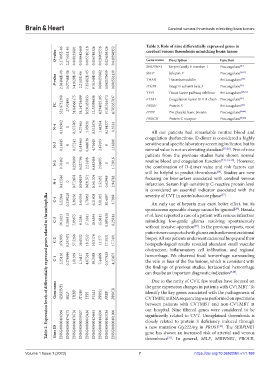
                                                               Table 3. Role of nine differentially expressed genes in
                                                               cerebral venous thrombosis mimicking brain tumor
                         Q‑value  5.17005E-06  2.27553E-05  0.000133801  0.000442469  0.005510118  0.006748326  0.020902556  0.024538326  0.048398952  Gene name  Description  Function

                                                               SERPINE1  Serpin family E member 1  Procoagulant [36]
                                                                                               Procoagulant
                                                                         Selectin P
                                                               SELP
                                                                                                       [32,37]
                         P‑value  2.58404E-09  3.07748E-08  3.41029E-07  2.2115E-06  7.35482E-05  9.76149E-05  0.000455682  0.000570659  0.001501439  THBD  Thrombomodulin  Anticoagulant [39]
                                                                                                        [38]
                                                                                               Procoagulant
                                                                         Integrin subunit beta 3
                                                               ITGB3
                                                               TFPI      Tissue factor pathway inhibitor  Anticoagulant [35]
                                                                                                        [40,41]
                         FC  352.8751368  27.92495  31.84366175  34.14724589  8.591435853  12.33398636  4.294925185  57.01516573  4.705337837  F13A1  Coagulation factor XIII A chain Procoagulant [43,44]
                                                                         Protein S
                                                               PROS1
                                                                                               Anticoagulant
                                                                                                        [42]
                                                                                               Procoagulant
                                                               PPBP
                                                                         Pro-platelet basic protein
                                                               PROCR     Protein C receptor    Procoagulant [45,46]
                         N‑4  0.181902  0  0.375565  0.27465  1.05931  0.512676  1.44264  0.184277  1.3534  All  our  patients  had  remarkable  routine  blood  and
                                                               coagulation dysfunctions. D-dimer is considered a highly
                         N‑3  0.14045  0  0.77242  0.514465  0.644038  4.75645  2.69163  0  1.16286  sensitive and specific laboratory screening indicator, but its
                                                               normal value is not an obviating standard
                                                                                                   . Five of nine
                                                                                                [15,26]
                                                               patients from the previous studies have shown normal
                         N‑2  0.76462  0  0.259109  0.027796  2.21498  0.482464  2.04695  0  1.72016  routine blood and coagulation function [7,11,13-15] . However,
                                                               the combination of D-dimer value and risk factors can
                                                               still be helpful to predict thrombosis . Studies are now
                                                                                             [26]
                         N‑1  0.413546  0  0.772478  0.540819  0.831571  0.161204  2.52432  0.62949  2.94748  focusing on biomarkers associated with cerebral venous
                                                               infarction. Serum high-sensitivity C-reactive protein level
                                                               is considered an essential indicator associated with the
                                                                                               [27]
                     Table 2. Expression levels of differentially expressed genes related to thrombophilia
                         C‑4  5.22394  0.239218  3.36236  3.65576  1.78063  6.11608  3.01435  30.4097  3.7969  severity of CVT in acute/subacute phase .
                                                                 An early use of heparin may exert better effect, but its
                                                               spontaneous agreeable change cannot be ignored . Harada
                                                                                                     [28]
                         C‑3  56.1023  0.369313  7.93675  6.2385  17.1041  18.4394  15.6811  0.097438  8.25014  et al. have reported a case of a patient with venous infarction
                                                               mimicking low-grade glioma resolving  spontaneously
                                                               without invasive operation . In the previous reports, most
                                                                                    [29]
                                                               patients were suspected with glioma and underwent excisional
                           479.993  0.197471  57.5268  36.6532  18.1522  10.5174  11.377  17.5531  17.7491  biopsy. All our patients underwent excisional biopsy and their
                         C‑2                                   histopathological results revealed abundant small vascular
                                                               obstruction, inflammatory cell infiltration, and regional
                           2.25126  0.270996  1.81339  1.14117  4.07518  38.3088  7.44899  0.577429  4.15475  hemorrhage. We observed focal hemorrhage surrounding
                         C‑1                                   the vein in four of the five lesions, which is consistent with
                                                               the findings of previous studies. Juxtacortical hemorrhage
                                                               can thus be an important diagnostic indication [5,28] .
                                                                 Due to the rarity of CVT, few studies have focused on
                         Gene name  SERPINE1  SELP  THBD  ITGB3  TFPI  F13A1  PROS1  PPBP  PROCR  the gene expression changes in patients with CVTMBT. To
                                                               identify the key genes associated with the pathogenesis of
                                                               CVTMBT, mRNA sequencing was performed on specimens
                                                               between patients with CVTMBT and non-CVTMBT at
                                                               our  hospital.  Nine  filtered  genes  were  considered to  be
                           ENSG00000106366  ENSG00000174175  ENSG00000178726  ENSG00000259207  ENSG00000003436  ENSG00000124491  ENSG00000184500  ENSG00000163736  ENSG00000101000  closely related to protein S deficiency induced through
                                                               significantly related to CVT. Unexplained thrombosis is
                                                               a new mutation  Gly222Arg in  PROS1 . The  SERPINE1
                                                                                              [30]
                         Gene ID                               gene has shown an increased risk of arterial and venous
                                                               thromboses . In general,  SELP, SERPINE1, PROCR,
                                                                        [31]

            Volume 1 Issue 1 (2023)                         7                       https://doi.org/10.36922/bh.v1i1.188

