


Page 103 - BH-2-2
P. 103
Brain & Heart                                                    Surviving rhino-orbital-cerebral mucormycosis


            A


            B                       C


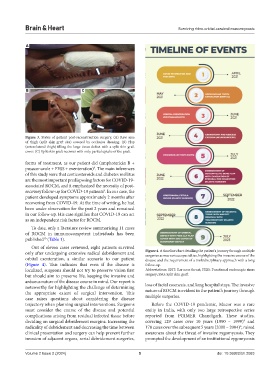
            Figure  3.  Status of patient post-reconstruction surgery. (A) Raw area
            of thigh (split skin graft site) covered by occlusive dressing. (B) Flap
            (anterolateral thigh) filling the large tissue defect with a split skin graft
            cover. (C) Split skin graft necrosis with only partial uptake of the graft.
            forms of treatment, as our patient did (amphotericin B +
            posaconazole + FESS + exenteration) . The main inferences
                                         9
            of this study were that corticosteroids and diabetes mellitus
            are the most important predisposing factors for COVID-19-
            associated ROCM, and it emphasized the necessity of post-
            recovery follow-up for COVID-19 patients . In our case, the
                                             9
            patient developed symptoms approximately 2 months after
            recovering from COVID-19. At the time of writing, he had
            been under observation for the past 2 years and remained
            in our follow-up. His case signifies that COVID-19 can act
            as an independent risk factor for ROCM.
              To date, only a literature review summarizing 11 cases
            of ROCM in immunocompetent individuals has been
            published  (Table 1).
                    10
              Out of eleven cases reviewed, eight patients survived
            only after undergoing extensive radical debridement and   Figure 4. A timeline chart detailing the patient’s journey through multiple
                                                               surgeries across various specialties, highlighting the invasive course of the
            orbital exenteration, a similar scenario to our patient   disease and the requirement of a multidisciplinary approach with a long
            (Figure  4). This indicates that even  if the disease  is   follow-up.
            localized, surgeons should not try to preserve vision first   Abbreviations: ENT: Ear nose throat; FESS: Functional endoscopic sinus
            but should aim to preserve life, keeping the invasive and   surgery; SSG: Split skin graft.
            arduous nature of the disease course in mind. Our report is
            noteworthy for highlighting the challenge of determining   loss of facial cosmesis, and long hospital stays. The invasive
            the appropriate extent of surgical intervention. This   nature of ROCM is evident in the patient’s journey through
            case raises questions about considering the disease   multiple surgeries.
            trajectory when planning surgical interventions. Surgeons   Before the COVID-19 pandemic, Mucor was a rare
            must  consider  the  course  of the disease and  potential   entity in India, with only two large retrospective series
            complications arising from residual infected tissue before   reported from PGIMER Chandigarh. These studies,
            deciding on surgical debridement margins. Increasing the   covering  129  cases  over  10  years  (1990  –  1999)   and
                                                                                                         4
            radicality of debridement and decreasing the time between   178 cases over the subsequent 5 years (2000 – 2004) , raised
                                                                                                       6
            clinical presentation and surgery can help prevent further   awareness about the threat of invasive zygomycosis. They
            invasion of adjacent organs, serial debridement surgeries,   prompted the development of an institutional zygomycosis

            Volume 2 Issue 2 (2024)                         5                                doi: 10.36922/bh.2083

