


Page 33 - DP-1-1
P. 33
Design+                                                        Industrial design leads to understanding of users


                                                               2. Methodology

                                                               The systematic literature review method on published
                                                               articles was used in this research. The systematic literature
                                                               review was conducted on articles and books discussing
                                                               the ID history, Industrial Designers articles, user-centered
                                                               design (UCD), human-centered design (HCD), and other
                                                               design methods. The method chosen includes searching
                                                               different  databases  to find published articles and books
                                                               related to the aforementioned topics, which are discussed
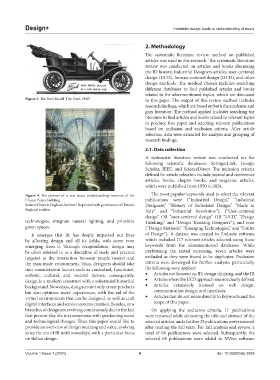
            Figure 3. The Ford Model T by Ford, 1908 7         in this paper. The output of this review method includes
                                                               research findings, which are based on both the academic and
                                                               gray literature. The method applied includes searching the
                                                               literature to find articles and books related to relevant topics
                                                               to produce this paper and selecting relevant publications
                                                               based on inclusion and exclusion criteria. After article
                                                               selection, data were extracted for analysis and grouping of
                                                               research findings.

                                                               2.1. Data collection
                                                               A systematic literature review was conducted on the
                                                               following scientific databases: SpringerLink, Google
                                                               Scholar, IEEE, and ScienceDirect. The inclusion criteria
                                                               defined for article selection include journal and conference
                                                               articles, books, chapter books, and magazine articles,
                                                               which were published from 1950 to 2024.
            Figure  4. The pioneer of a new space understanding: interiors of the   The most popular keywords used to select the relevant
            Crystal Palace building                            publications were (“Industrial Design,” “Industrial
            Source: Historic England Archive.  Reprinted with permission of Historic   Designers,” “History of Industrial Design,” “Made in
                                 8
            England archive.                                   Italy” and “Industrial Revolution”), (“User-centered
                                                               design” OR “user-centered design” OR “UCD,” “Design
            technologies, integrate natural lighting, and prioritize   Thinking,” and “Design Thinking Designers”), and even
            green spaces.                                      (“Design Methods,” “Emerging Technologies,” and “Future
              It emerges that IR has deeply impacted our lives   of Design”). A  dataset was created in Endnote software
            by affecting design and all its fields, with some even   which included 117 relevant articles selected using these
            emerging from it. Through recapitulation, design may   keywords from the aforementioned databases. While
            be often referred to as a discipline of study and practice   performing the initial screening, seven articles were
            targeted at the interaction between people (users) and   excluded as they were found to be duplicates. Exclusion
            the man-made environment. Thus, designers should take   criteria were developed for further analysis; particularly,
            into consideration factors such as contextual, functional,   the following were applied:
            esthetic, cultural, and societal factors; consequently,   •   Articles not focused on ID, design thinking, and the IR
            design is a modern construct with a substantial historical   •   Articles where the UCD approach was not clearly defined
            background. Nowadays, designers not only create products   •   Articles  extensively  focused  on  web  design,
            but also optimize users’ experiences, with the aid of the   communication design, and interfaces
            virtual environments that can be designed, as well as craft   •   Articles that do not relate directly to keywords and the
            digital interfaces and service systems creation. Besides, new   scope of this paper.
            branches of design are evolving continuously due to the fact   On applying the exclusion criteria, 17 publications
            that present-day life is synonymous with quickening social   were removed while skimming the title and abstract of the
            and technological changes. Thus, this paper would like to   selected articles, and a further 25 publications were removed
            provide an overview of design meaning and value, evolving   after reading the full texts. For full analysis and review, a
            since the era of IR until nowadays, with a particular focus   total  of  68  publications  were  selected.  Subsequently,  the
            on Italian design.                                 selected  68  publications  were  added  to  NVivo  software


            Volume 1 Issue 1 (2024)                         4                                doi: 10.36922/dp.3929

