


Page 109 - EER-1-1
P. 109
Explora: Environment
            and Resource                                                         Stratification and mixed layer deepening


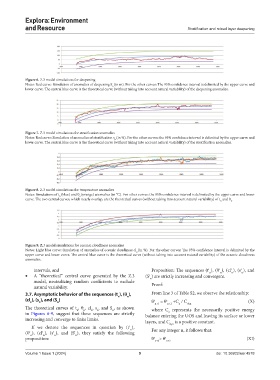
            Figure 6. Z.3 model simulations for deepening
            Notes: Red curve: Simulation of anomalies of deepening S (in m). For the other curves: The 95% confidence interval is delimited by the upper curve and
                                                 n
            lower curve. The central blue curve is the theoretical curve (without taking into account natural variability) of the deepening anomalies.


            Figure 7. Z.3 model simulations for stratification anomalies
            Notes: Red curve: Simulation of anomalies of stratification s (in %). For the other curves: the 95% confidence interval is delimited by the upper curve and
                                                  n
            lower curve. The central blue curve is the theoretical curve (without taking into account natural variability) of the stratification anomalies.


            Figure 8. Z.3 model simulations for temperature anomalies
            Notes: Simulations of t (blue) and θ (orange) anomalies (in °C). For other curves: the 95% confidence interval is delimited by the upper curve and lower
                          n
                                   n
            curve. The two central curves, which nearly overlap, are the theoretical curves (without taking into account natural variability) of t  and θ . n
                                                                                               n


            Figure 9: Z.3 model simulations for oceanic cloudiness anomalies
            Notes: Light blue curve: Simulation of anomalies of oceanic cloudiness cl (in %). For the other curves: The 95% confidence interval is delimited by the
                                                           n
            upper curve and lower curve. The central blue curve is the theoretical curve (without taking into account natural variability) of the oceanic cloudiness
            anomalies.
                                                                                          t
               intervals, and                                    Proposition: The sequences (t ), (θ ), (cl ), (s ), and
                                                                                                   t
                                                                                                       t
                                                                                              t
                                                                                               n
                                                                                          n
            •   A “theoretical” central curve generated by the Z.3   (S ) are strictly increasing and convergent.  n  n
                                                                t
               model, neutralizing random coefficients to exclude   n Proof:
               natural variability.
            3.7. Asymptotic behavior of the sequences (t ), (θ ),   From line 3 of Table S2, we observe the relationship:
                                                       n
                                                   n
            (cl ), (s ), and (S )                                θ t n+3  = θ t n+2  +C  / C dyn           (X)
                         n
              n
                  n
                                                                             n
            The theoretical curves of t , θ , cl , s , and S , as shown   where  C  represents the necessarily  positive energy
                                          n
                                                 n
                                        n
                                  n
                                     n
                                                                         n
            in  Figures  6-9, suggest that these sequences are strictly   balance entering the UOS and leaving its surface or lower
            increasing and converge to finite limits.          layers, and C  is a positive constant.
              If we denote the sequences in question by (t ),            dyn
                                                        t
                                                        n
            (θ ),  (cl ),  (s ),  and  (S ),  they  satisfy  the  following   For any integer n, it follows that:
              t
                                 t
                        t
                   t
                                 n
              n
                        n
                   n
            proposition:                                         θ t n+3 > θ t n+2                        (XI)
            Volume 1 Issue 1 (2024)                         9                                doi: 10.36922/eer.4578

