


Page 46 - EER-2-1
P. 46
Explora: Environment
            and Resource                                                         Statistical analysis of climate time series


              To verify the consistency of this proposed explanation   In Hasselmann’s theory, short-term random noise
            with the observations, the author developed a mathematical   (atmospheric weather) leads to longer-term variations (red
            model (called Z.1) that takes into account the energy   spectra at the ocean level). This is mathematically modeled
            exchanges between the sun, the troposphere, and the UOS   using a first-order autoregressive process, where the next
            while integrating the hypothesized interaction between the   step y  of the long-term variation depends on the previous
                                                                   t+1
            UOS heat and atmospheric temperature. The constants in   step y , weighted by the climatic memory m of the ocean,
                                                                    t
            the model were calibrated using the data observed during   and is disturbed by short-term variability x : t
            the period 1955 – 2022. The Z.1 program is explained and              y = m y + x
            summarized in Table 7 of the study.  We have reproduced                t+1   t  t
                                        24
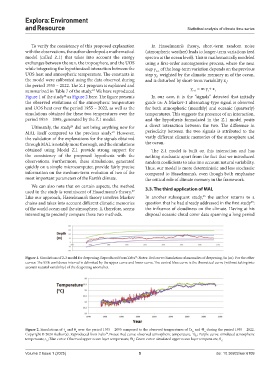
            Figure 1 of the study  as Figure 2 here. The figure presents   In our case, it is the “signals” detected that initially
                            24
            the observed evolutions of the atmospheric temperature   guide us: A Markov-1 alternating-type signal is observed
            and UOS heat over the period 1955 – 2022, as well as the   for both atmospheric (monthly) and oceanic (quarterly)
            simulations obtained for these two temperatures over the   temperatures. This suggests the presence of an interaction,
            period 1955 – 2095, generated by the Z.1 model.    and the hypothesis formulated in the Z.1 model posits
              Ultimately, the study  did not bring anything new for   a direct interaction between the two. The difference in
                               24
            MAL itself compared to the previous study.  However,   periodicity between the two signals is attributed to the
                                                 23
            the validation of the explanations for the signals obtained   vastly different climatic memories of the atmosphere and
            through MAL is notably more thorough, and the simulations   the ocean.
            obtained using Model Z.1 provide strong support for   The Z.1 model is built on this interaction and has
            the consistency of the proposed hypothesis with the   nothing stochastic apart from the fact that we introduced
            observations. Furthermore, these simulations, generated   random coefficients to take into account natural variability.
            quickly on a simple microcomputer, provide fairly precise   Thus, our model is more deterministic and less stochastic
            information on the medium-term evolution of two of the   compared to Hasselmann’s, even though both emphasize
            most important parameters of the Earth’s climate.  the critical role of climate memory in the framework.

              We can also note that on certain aspects, the method
            used in the study is reminiscent of Hasselmann’s theory.    3.3. The third application of MAL
                                                         29
                                                                                       25
            Like our approach, Hasselmann’s theory involves Markov   In another subsequent study,  the author returns to a
                                                                                                            23
            chains and takes into account different climatic memories   question that he had already addressed in the first study :
            of the world ocean and the atmosphere. It, therefore, seems   the influence of cloudiness on the climate. Having at his
            interesting to precisely compare these two methods.  disposal oceanic cloud cover data spanning a long period


            Figure 1. Simulations of Z.3 model for deepening. Reproduced from Zeltz .Notes: Red curve: Simulation of anomalies of deepening, Sn (m). For the other
                                                          26
            curves: The 95% confidence interval is delimited by the upper curve and lower curve. The central blue curve is the theoretical curve (without taking into
            account natural variability) of the deepening anomalies.


            Figure 2. Simulations of t  and θ  over the period 1955 – 2095 compared to the observed temperatures of Ta  and Θ  during the period 1955 – 2022.
                                                                                        n
                             n
                                                                                   n
                                 n
            Copyright © 2024 Author(s). Reproduced from Zeltz . Notes: Red curve: observed atmospheric temperature, Ta ; Purple curve: simulated atmospheric
                                              24
                                                                                    n
            temperature, t ; Blue curve: Observed upper ocean layer temperature, Θ ; Green curve: simulated upper ocean layer temperature, θ . n
                     n
                                                          n
            Volume 2 Issue 1 (2025)                         5                                doi: 10.36922/eer.6109

