


Page 48 - EER-2-1
P. 48
Explora: Environment
            and Resource                                                         Statistical analysis of climate time series


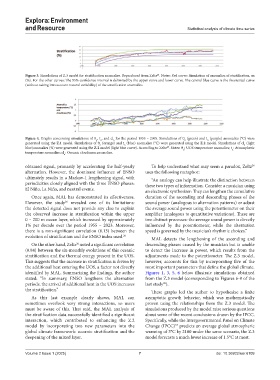
            Figure 3. Simulations of Z.3 model for stratification anomalies. Reproduced from Zeltz . Notes: Red curve: Simulation of anomalies of stratification, sn
                                                                    26
            (%). For the other curves: The 95% confidence interval is delimited by the upper curve and lower curve. The central blue curve is the theoretical curve
            (without taking into account natural variability) of the stratification anomalies.


            Figure 4. Graphs concerning simulations of θ , t , and cl  for the period 1955 – 2095. Simulations of θ  (green) and t  (purple) anomalies (°C) were
                                                                                n
                                                                                         n
                                                 n
                                          n
                                            n
            generated using the Z.1 model. Simulations of θ  (orange) and t  (blue) anomalies (°C) were generated using the Z.2 model. Simulations of cl  (light
                                                      n
                                           n
                                                                                                         n
                                                                        25
            blue)anomalies (%) were generated using the Z.2 model (light blue curve). According to Zeltz . Notes: θ : UOS temperature anomalies; t : Atmospheric
                                                                               n
                                                                                                    n
            temperature anomalies; cl : Oceanic cloudiness anomalies.
                            n
            obtained signal, primarily by accelerating the half-yearly   To help understand what may seem a paradox, Zeltz
                                                                                                            26
            alternation. However, the dominant influence of ENSO   uses the following metaphor:
            ultimately results in a Markov-1 lengthening signal, with   “An analogy can help illustrate the distinction between
            periodicities closely aligned with the three ENSO phases:   these two types of information. Consider a musician using
            El Niño, La Niña, and neutral events.              an electronic synthesizer: They can lengthen the cumulative
              Once again, MAL has demonstrated its effectiveness.   duration of the ascending and descending phases of the
            However, the study  revealed one of its limitations:   sound power (analogous to alternation patterns) or adjust
                             26
            the detected signal does not provide any clue to explain   the average sound power using the potentiometer on their
            the  observed  increase  in  stratification  within  the  upper   amplifier (analogous to quantitative variations). These are
            0 – 200 m ocean layer, which increased by approximately   two distinct processes: the average sound power is directly
            1% per  decade over  the period 1955 – 2023. Moreover,   influenced by  the potentiometer,  while  the  alternation
            there is a non-significant correlation (0.13)  between the   speed is governed by the musician’s rhythmic choices.”
            evolution of stratification and the ENSO index used. 26  MAL detects the lengthening of the ascending and
              On the other hand, Zeltz  noted a significant correlation   descending phases caused by the musician but is unable
                                 26
            (0.84) between the six-monthly evolutions of this oceanic   to  detect  the  increase  in  power,  which  results  from  the
            stratification and the thermal energy present in the UOS.   adjustments made to the potentiometer. The Z.3 model,
            This suggests that the increase in stratification is driven by   however, accounts for this by incorporating five of the
            the additional heat entering the UOS, a factor not directly   most important parameters that define the global climate.
            identified by MAL. Summarizing the findings, the author   Figures  1,  3,  5,  6 below illustrate simulations obtained
            stated:  “In summary, ENSO  lengthens the  alternation   from the Z.3 model (corresponding to Figures 6-9 of the
            periods, the arrival of additional heat in the UOS increases   last study ).
                                                                      26
            the stratification.”                                 These  graphs led the author to hypothesize a finite
              As this last example clearly shows, MAL can      asymptotic growth behavior, which was mathematically
            sometimes overlook very strong interactions, so users   proven using the relationships from the Z.3 model. The
            must be aware of this. That said, the MAL analysis of   simulations produced by the model raise serious questions
            the stratification data successfully identified a significant   about some of the recent conclusions drawn by the IPCC.
            interaction, which contributed to enhancing the Z.2   Specifically, while the Intergovernmental Panel on Climate
            model by incorporating two new parameters into the   Change (IPCC)  predicts an average global atmospheric
                                                                            34
            global climate framework: oceanic stratification and the   warming of 3°C by 2100 under the same scenario, the Z.3
            deepening of the mixed layer.                      model forecasts a much lower increase of 1.5°C at most.


            Volume 2 Issue 1 (2025)                         7                                doi: 10.36922/eer.6109

