


Page 49 - EER-2-1
P. 49
Explora: Environment
            and Resource                                                         Statistical analysis of climate time series


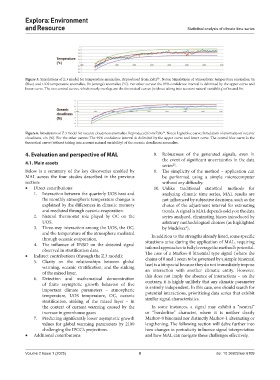
            Figure 5. Simulations of Z.3 model for temperature anomalies. Reproduced from Zeltz . Notes: Simulations of atmospheric temperature anomalies, tn
                                                                    26.
            (blue) and UOS temperature anomalies, θn (orange) anomalies (°C). For other curves: the 95% confidence interval is delimited by the upper curve and
            lower curve. The two central curves, which nearly overlap, are the theoretical curves (without taking into account natural variability) of tn and θn.


                                                                      26
            Figure 6. Simulations of Z.3 model for oceanic cloudiness anomalies. Reproduced from Zeltz . Notes: Light blue curve: Simulation of anomalies of oceanic
            cloudiness, cln (%). For the other curves: The 95% confidence interval is delimited by the upper curve and lower curve. The central blue curve is the
            theoretical curve (without taking into account natural variability) of the oceanic cloudiness anomalies.
            4. Evaluation and perspective of MAL                  8.  Robustness of the generated signals, even in
                                                                      the event of significant uncertainties in the data
            4.1. Main assets                                          series .
                                                                           25
            Below  is  a  summary  of  the  key  discoveries  enabled  by   9.  The simplicity of the method – application can
            MAL across the four studies described in the previous     be performed using a simple microcomputer
            section:                                                  without any difficulty.
            •   Direct contributions:                             10.  Unlike traditional statistical methods for
               1.  Interaction between the quarterly UOS heat and     analyzing climatic time series, MAL results are
                   the monthly atmospheric temperature changes is     not influenced by subjective decisions, such as the
                   explained by the differences in climatic memory    choice of the adjustment interval for estimating
                   and mediated through oceanic evaporation.          trends. A signal in MAL depends solely on the data
               2.  Natural thermostat role played by OC on the        series analyzed, eliminating biases introduced by
                   UOS.                                               arbitrary methodological choices (as highlighted
               3.  Three-way interaction among the UOS, the OC,       by Mudelsee ).
                                                                                6
                   and the temperature of the atmosphere mediated   In addition to the strengths already listed, some specific
                   through oceanic evaporation.
               4.  The  influence  of  ENSO  on  the  detected  signal   situations arise during the application of MAL, requiring
                                                               tailored approaches to fully leverage the method’s potential.
                   observed in stratification data.
            •   Indirect contributions (through the Z.3 model):  The case of a Markov-0 binomial type signal (where the
               5.  Clarity  on  the  relationships  between  global   chains of 0 and 1 seem to be governed by a simple binomial
                   warming, oceanic stratification, and the sinking   law) is a bit special because they do not immediately impose
                   of the mixed layer.                         an  interaction  with  another  climatic  entity.  However,
               6.  Detection and mathematical demonstration    this does not imply the absence of interactions – on the
                   of  finite  asymptotic  growth  behavior  of  five   contrary, it is highly unlikely that any climatic parameter
                   important climate parameters – atmospheric   is entirely independent. In this case, one should search for
                   temperature, UOS temperature, OC, oceanic   potential interactions, prioritizing data series that exhibit
                   stratification, sinking of the mixed layer – in   similar signal characteristics.
                   the  context  of  current  warming  caused  by  the   In some instances, a signal may exhibit a “neutral”
                   increase in greenhouse gases                or “borderline” character, where it is neither clearly
               7.  Predicting significantly lower asymptotic growth   Markov-0 binomial nor distinctly Markov-1 alternating or
                   values  for  global  warming  parameters by  2100   lengthening. The following section will delve further into
                   challenging the IPCC’s projections.         how changes in periodicity influence signal interpretation
            •   Additional contributions                       and how MAL can navigate these challenges effectively.


            Volume 2 Issue 1 (2025)                         8                                doi: 10.36922/eer.6109

