


Page 61 - EER-2-1
P. 61
Explora: Environment
            and Resource                                                                Sustainable urban park design


            Table 1. Analysis of three studies examining the sustainability of urban parks in general
            Study                Aim                           Method                          Result
            Yildizci and   Determining quality criteria that   The criteria were determined as activities and uses   Comfort, image, security,
            Yücel 23   effectively create a quality living   (diversity), accessibility (legibility), comfort and image  maintenance, and sociability were
                       environment for users in urban   (security and maintenance), and sociability (sense   effective criteria, and diversity was
                       parks.                   of ownership). The criteria were examined through   ineffective. The differentiation in
                                                surveys conducted with users in Maçka, Ulus, and   sociodemographic characteristics
                                                Zeytinburnu parks. The collected information was   affected the perceptions of quality
                                                subjected to a Chi-square significance test.  criteria.
            Ibes 22    Developing a vision for a sustainable   The approach was applied to Phoenix, Arizona. A set   The findings showed that
                       urban park system and a quantitative  of quantitative variables reflecting sustainable parks   multidimensional analysis of the
                       methodology that examines four   were selected and calculated; size, particular facilities   urban park system can provide a
                       key dimensions of sustainability   and amenities, microclimate cooling, land cover, land   more detailed understanding and
                       (physical, environmental,   uses surrounding parks, neighborhood population   data for sustainable urban park
                       socioeconomic, and built   density, income, and ethnic mix. Descriptive statistics   management and policy, as well as
                       environment) across the city-wide   for variables and correlations between them were   park planning and design.
                       urban park system        investigated.
            Dizdaroğlu 21  Contribution to making cities more   The study systematically reviewed the relevant   The study contributes to a
                       sustainable by developing a set of   literature and determined 10 basic goals for   comprehensive sustainable park
                       criteria for sustainable urban park   the sustainable design of urban parks; green   design. The proposed design criteria
                       design.                  infrastructure, place for people of all ages, connected   provide a basis for transforming
                                                park systems, water and energy, conservation   urban parks into sustainable green
                                                practices, access to fresh and healthy food, preserving   spaces by promoting potential
                                                biodiversity, environmental education, long-term   improvements.
                                                maintenance and management, and disaster resilience.


                                                        • Identification of 32 design elements that can contribute to
                                  Literature review
                                                          sustainability of urban parks
                                                        • Evaluation of the importance of design elements on a 5 point
                                   Survey study           Likert-scale by 318 respondents


                                                        • Descriptive statistics on demographic characteristics of
                                                          participants and design elements
                            Descriptive and reliability analysis
                                                        • Calculation of IRI of design elements
                                                        • Reliability analysis of the scale
                                                        • Gathering 30 design elements under six factors
                                  Factor analysis       • Creating the sustainable urban park design model by naming
                                                         the factors appropriately


                                   Case study           • Examination of Altınpark through the created model


                                Discussion of results   • Evaluation of the importance of the criteria based on literature


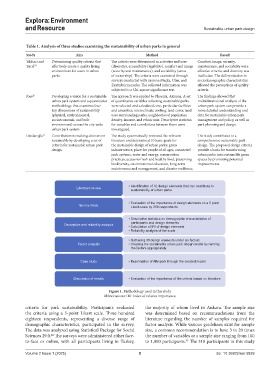
                                               Figure 1. Methodology used in this study
                                             Abbreviations: IRI: Index of relative importance.

            criteria for park sustainability. Participants evaluated   the majority of whom lived in Ankara. The sample size
            the criteria using a 5-point Likert scale. Three hundred   was determined based on recommendations from the
            eighteen respondents,  representing  a diverse range  of   literature regarding the number of samples required for
            demographic characteristics, participated in the survey.   factor analysis. While various guidelines exist for sample
            The data was analyzed using Statistical Package for Social   size, a common recommendation is to have 3 to 20 times
            Sciences 29.0.  The surveys were administered either face-  the number of variables or a sample size ranging from 100
                       44
            to-face or online, with all participants living in Turkey,   to 1,000 participants.  The 318 participants in this study
                                                                                45
            Volume 2 Issue 1 (2025)                         5                                doi: 10.36922/eer.5839

