


Page 62 - EER-2-1
P. 62
Explora: Environment
            and Resource                                                                Sustainable urban park design


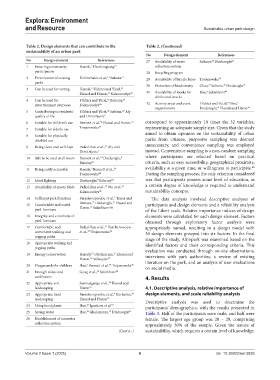
            Table 2. Design elements that can contribute to the   Table 2. (Continued)
            sustainability of an urban park
                                                               No      Design element         References
            No      Design element         References          27  Availability of waste   Sultana,  Dizdaroglu 21
                                                                                           27
            1   Ensuring community   Harnik,  Phetkongtong 10      collection system
                                        5
                participation                                  28  Recycling program
            2   Preservation of existing   Kolimenakis et al.,  Sultana 27  29  Availability of bicycle lanes  Trojanowska 28
                                               18
                parks
                                                                                                27
                                                                                          34
                                                               30  Protection of biodiversity  Chao,  Sultana,  Dizdaroglu 21
            3   Can be used for resting  Harnik,  Yildizci and Yücel,                    6       40
                                                    23
                                        5
                                   Elassal and Haron,  Kalansooriya 26  31  Availability of kiosks for   Ibes,  Safarkhani
                                               14
                                                                   drinks and snacks
                                               23
                                                     24
            4   Can be used for    Yildizci and Yücel,  Bahriny,                                  23  6
                entertainment purposes  Kalansooriya 26        32  Activity areas and event   Yildizci and Yücel,  Ibes,
                                                                   organizations      Dizdaroglu,  Elassal and Haron 14
                                                                                             21
                                               23
            5   Contributing to residents’   Yildizci and Yücel,  Sultana,  Aly
                                                     27
                quality of life    and Dimitrijevic 7
            6   Suitable for children’s use  Bennett et al.,  Elassal and Haron,    correspond to approximately 10  times the 32 variables,
                                                         14
                                            36
            7   Suitable for elderly use  Trojanowska 28       representing an adequate sample size. Given that the study
            8   Suitable for physically                        aimed to obtain opinions on the sustainability of urban
                disabled use                                   parks from citizens, purposive sampling was deemed
                                              37
            9   Being clean and well-kept  Padial-Ruz et al.,  Aly and   unnecessary, and convenience sampling was employed
                                   Dimitrijevic 7              instead. Convenience sampling is a non-random sampling
            10  Safe to be used at all hours  Bennett et al.,  Dizdaroğlu,   8  where  participants are selected  based on  practical
                                            36
                                   Bahriny 24                  criteria, such as easy accessibility, geographical proximity,
                                                                                                            46
            11  Being easily accessible  Harnik,  Bennett et al.,    availability at a given time, or willingness to participate.
                                        5
                                                 36
                                   Trojanowska 28              During the sampling process, the only criterion considered
            12  Good lighting      Dizdaroğlu,  Bahriny 24     was that participants possess some level of education, as
                                          8
            13  Availability of sports fields  Padial-Ruz et al.,  Wu et al.,    a certain degree of knowledge is required to understand
                                              37
                                                     13
                                   Kalansooriya 26             sustainability concepts.
            14  Sufficient park furniture  Paraskevopoulou et al.,  Tereci and   The data analysis involved descriptive analyses of
                                                  9
                                        19
                                                 21
            15  Comfortable and useful   Atmaca,  Dizdaroğlu,  Elassal and   participants and design elements and a reliability analysis
                                       14
                park furniture     Haron,  Safarkhani40        of the Likert scale. Relative importance indices of design
            16  Integrity and continuity of                    elements were calculated for each design element. Factors
                park furniture                                 obtained through exploratory factor analysis were
            17  Comfortable and    Padial-Ruz et al.,  Van Renswouw   appropriately named, resulting in a design model with
                                              37
                convenient walking and   et al.,  Trojanowska 28  30 design elements grouped into six factors. In the final
                                      42
                jogging paths                                  stage of the study, Altinpark was examined based on the
            18  Appropriate walking and                        identified factors and their corresponding criteria. This
                jogging paths
                                                               evaluation was conducted through on-site observations,
            19  Energy conservation  Haredy,  Gholamreza,  Elassal and   interviews with park authorities, a review of existing
                                                 17
                                        15
                                   Haron,  Velásquez 15
                                       14
            20  Playgrounds for children  Ibes,  Bennett et al.,  Trojanowska 28  literature on the park, and an analysis of user evaluations
                                               36
                                      6
                                                               on social media.
            21  Enough toilets and   Gong et al.,  Safarkhani 40
                                          25
                washbasins                                     4. Results
            22  Appropriate soft   Sanmargaraja et al.,  Elassal and
                                               38
                landscaping        Haron 14                    4.1. Descriptive analysis, relative importance of
            23  Appropriate hard   Paraskevopoulou et al.,  Kurtaslan,    design elements, and scale reliability analysis
                                                         39
                                                  9
                landscaping        Elassal and Haron 14        Descriptive analysis was used to determine the
            24  Using local plants  Ibes,  Ignatieva et al. 33  participants’ demographics, with the results presented in
                                      22
            25  Saving water       Ibes,  Gholamreza,  Dizdaroglu 21  Table 3. Half of the participants were male, and half were
                                               17
                                      22
            26  Establishment of rainwater                     female. The largest age group was 20 – 29, comprising
                collection system                              approximately 30% of the sample. Given the nature of
                                                    (Cont'd...)  sustainability, which requires a certain level of knowledge,
            Volume 2 Issue 1 (2025)                         6                                doi: 10.36922/eer.5839

