


Page 127 - EER-2-2
P. 127
Explora: Environment
            and Resource                                                       Microemulsion-based canola oil extraction


                         A


                         B


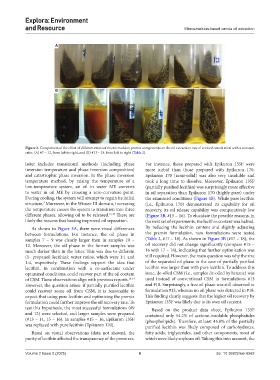
            Figure 3. Comparison of the effect of different ratios of microemulsion premix components on the oil extraction rate of cooked canola meal with a constant
            ratio. (A) #7 – 12, from left to right, and (B) #13 – 18, from left to right (Table 2).

            latter includes transitional methods (including phase   For instance, those prepared with Epikuron 135F were
            inversion temperature and phase inversion composition)   more turbid than those prepared with Epikuron 170.
            and catastrophic phase inversion. In the phase inversion   Epikuron 170 (semi-solid) was also  very insoluble and
            temperature method, by raising the temperature of a   took  a  long  time  to  dissolve.  Moreover,  Epikuron  135F
            low-temperature system, an oil in water ME converts   (partially purified lecithin) was surprisingly more effective
            to  water  in  oil  ME  by  crossing  a  zero-curvature  point.   in oil separation than Epikuron 170 (highly pure) under
            During cooling, the system will attempt to regain its initial   the examined conditions (Figure 3B). While pure lecithin
            structure.  Moreover, in the Winsor III domain, increasing   (i.e., Epikuron 170) demonstrated its capability for oil
                   7
            the temperature causes the system to transition into three   recovery, its oil release capability was comparatively low
            different phases, allowing oil to be released. 15,16  These are   (Figure 3B, #15 – 16). To elucidate the possible reasons, in
            likely the reasons that heating improved oil separation.  the next set of experiments, the lecithin content was halved.
              As shown in Figure 3A, there were visual differences   By reducing the lecithin content and slightly adjusting
            between formulations. For instance, the oil phase in   the premix formulation, new formulations were tested
            samples  7  –  9  was  clearly  larger  than  in  samples  10  –   (Table 2, #17 – 18). As shown in Figure 3B (#17 – 18), the
            12. Moreover, the oil phase in the former samples was   oil recovery did not change significantly (compare #15 –
            much darker than in the latter. This was due to different   16 with 17 – 18), indicating that further optimization was
            (1- propanol: lecithin): water ratios, which were 1:1 and   still required. However, the main question was why the size
            1:4, respectively. These findings support the idea that   of the separated oil phase in the case of partially purified
            lecithin, in combination with a co-surfactant under   lecithin was larger than with pure lecithin. To address this
            optimized conditions, could recover part of the oil content   issue, de-oiled CSM (i.e., samples de-oiled by hexane) was
            of CSM. These observations align with previous reports. 13,14    used instead of conventional CSM in formulations #13
            However, the question arises: if partially purified lecithin   and #18. Surprisingly, a free oil phase was still observed in
            could recover some oil from CSM, it is reasonable to   formulation #13, whereas no oil phase was detected in #18.
            expect that using pure lecithin and optimizing the premix   This finding clearly suggests that the higher oil recovery by
            formulation could further improve the oil recovery rate. To   Epikuron 135F was likely due to its own oil content.
            test this hypothesis, the most successful formulations (#9   Based on the product data sheet, Epikuron 135F
            and 12) were selected, and larger samples were prepared   contained only 54.2% of acetone-insoluble phosphatides
            (#13 – 14, 15 – 16). In samples #15 – 16, Epikuron 135F   (phospholipids). Therefore, at least 45.8% of the partially
            was replaced with pure lecithin (Epikuron 170).    purified lecithin was likely composed of carbohydrates,
              Based  on  visual  observations  (data  not  shown),  the   fatty acids, triglycerides, and other components, most of
            purity of lecithin affected the transparency of the premixes.   which were likely soybean oil. Taking this into account, the


            Volume 2 Issue 2 (2025)                         6                                doi: 10.36922/eer.6562

