


Page 129 - EER-2-2
P. 129
Explora: Environment
            and Resource                                                       Microemulsion-based canola oil extraction


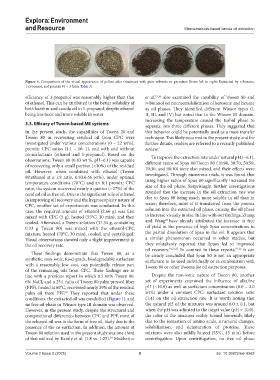
            Figure 4. Comparison of the visual appearance of pellets after treatment with pure solvents or premixes (from left to right: Extracted by n-hexane,
            1-propanol, and premix #1 – 3 from Table 3)

            efficiency of 1-propanol was reasonably higher than that   et al. 15,16  also examined the capability of Tween 80 and
            of ethanol. This can be attributed to the better solubility of   n-butanol on microemulsification of kerosene and hexane
            both lecithin and canola oil in 1-propanol, despite ethanol   as oil phases. They identified different Winsor types (I,
            being less toxic and more soluble in water.        II, III, and IV) but noted that in the Winsor III domain,
                                                               increasing the temperature caused the turbid phase to
            3.3. Efficacy of Tween-based ME systems            separate into three different phases. They suggested that
            In the present study, the capabilities of Tween 20 and   this behavior could be potentially used as a mass transfer
            Tween 80 in recovering residual oil from CPC were   technique. This likely occurred in the present study, and for
            investigated under various concentrations (0 – 22 wt%),   further details, readers are referred to a recently published
            premix: CPC ratios (1:1 – 16: 1), and with and without   review. 7
            co-surfactants (ethanol and 1-propanol). Based on the
                                                                 To improve the extraction rate under natural pH (~6.1),
            observations, Tween 80 (0.83 wt %, pH~6.1) was capable   different ratios of Span 80:Tween 80 (10:90, 30:70, 50:50,
            of recovering only a small portion (<10%) of the residual   70:30, and 90:10) were also mixed, and their effects were
            oil. However, when combined with ethanol (Tween    investigated. Through numerous trials, it was found that
            80:ethanol at a 1:8 ratio, 0.83:6.66 wt%), under optimal
            temperature conditions (70°C) and an 8:1 premix: CPC   using higher ratios of Span 80 significantly increased the
            ratio, the system recovered nearly a quarter (~27%) of the   size  of  the  oil  phase.  Surprisingly,  further  investigations
            residual oil as free oil. Due to the significant role of ethanol   revealed that the increase in the oil extraction rate was
            in improving oil recovery and the hygroscopicity nature of   due to Span 80 being much more soluble in oil than in
            CPC, another set of experiments was conducted. In this   water; therefore, most of it transferred from the premix
            case, the required amount of ethanol (2.66  g) was first   solution into the extracted oil phase, causing the oil phase
            mixed with CPC (5 g), heated (55°C, 30 min), and then   to increase visually in size. In line with our findings, Zhang
                                                                       23
            cooled. Afterward, a Tween solution (37.34 g, containing   and Wang have already attributed the increase in free
            0.33  g  Tween 80)  was  mixed  with  the  ethanol-CPC   oil yield in the presence of high Span concentrations to
            mixture, heated (70°C, 30 min), cooled, and centrifuged.   the partial dissolution of Span in the oil. It appears that
            Visual observations showed only a slight improvement in   a similar phenomenon occurred in other studies,  but
            the oil recovery rate.                             they mistakenly reported that Spans led to improved
                                                               oil recovery. 18,21,22  In contrast to these reports, 21,22  it can
              These findings demonstrate that Tween 80, as a   be clearly concluded that Span 80 is not an appropriate
            synthetic, non-ionic, food-grade, biodegradable surfactant   surfactant to be used individually or in combination with
            with a reasonably low cost, can potentially release part   Tween 80 or other Tweens for oil extraction purposes.
            of the  remaining oils from CPC.  These findings are in
            line with a previous report in which 0.5 wt% Tween 80,   Despite the non-ionic nature of Tween 80, another
            6% NaCl, and a 25:1 ratio of Tween 80:palm pressed fiber   set of experiments examined the influence of alkaline
            (PPF), heated at 60°C, recovered nearly 39% of the residual   pH (~10.0) as well as surfactant concentration (0.0 – 2.0
            palm oil from PPF.  They reported that under these   wt%) under a constant CPC:  surfactant solution ratio
                             18
            conditions, the extracted oil was emulsified (Figure 1), and   (1:4) on the oil extraction rate. It is worth noting that
            no free oil phase or Winsor type III domain was observed.   the natural pH of the mixtures was around 6.0 ± 0.1, but
            However, in the present study, despite the structural and   when the pH was adjusted to the target value (pH = 10.0),
            compositional differences between CPC and PPF, most of   the color of the mixtures visibly turned brownish, likely
            the released oil was in the form of free oil, likely due to the   due to the ionization of amino acids, structural changes,
            presence of the co-surfactant. In addition, the amount of   solubilization, and denaturation of proteins. These
            Tween 80 solution used in the present study was one-third   mixtures were also mildly heated (55°C, 45 min) before
            of that utilized by Ramly et al. (1:8 vs. 1:25).  Mukherjee   centrifugation. Upon centrifugation, no free oil phase
                                                18

            Volume 2 Issue 2 (2025)                         8                                doi: 10.36922/eer.6562

