


Page 41 - EER-2-2
P. 41
Explora: Environment
            and Resource                                                        Anabaena-Azolla for crops and bioenergy


            Table 2. Bioaccumulation of heavy metals by Azolla species  saline soil patches have a pH between 7.5 and 8.5, a
                                                               higher concentration of all types of salt, and an electrical
            Azolla species  Heavy metal  Concentration   Reference  conductivity of soil saturation extract >4 dS/cm.  Alkaline
                                                                                                     5
                                       of heavy metal
                                       accumulated             soils have high pH values (8.5 – 10), low calcium, high
                                       (µg metal/g)            levels of exchangeable sodium ions (>15%), free carbonate
            Azolla pinnata  Cadmium       2,759      106       and bicarbonate, and electrical conductivity of saturation
                          Mercury          450       107       soil extracts <4 dS/cm. Aeration, infiltration rate, and soil
                          Chromium (III)  1,095      108       structure are all very low in alkaline soils. These soils lack
                          Chromium (VI)   9,125      105       nitrogen, are hard, and have low water-holding capabilities.
                                                                                                             5
            Azolla caroliniana  Lead       416       109       When wet, cyanobacterial biomass becomes sticky, and
                          Chromium         964       110       when dry, it becomes rigid. Alkaline soil’s pH rises as a
                          Arsenic         >120       111
                          Cadmium          259       109       result of hydrogen ions switching places with positively
                          Mercury          578       110       charged ions on negatively charged clay particles. Usar soil
                          Chromium (III)   964       110       is unsuitable for agricultural applications due to its high
                          Chromium (VI)    356       110       alkalinity, osmotic pressure, and impermeability. Because
            Azolla filiculoides  Nickel   28,443     106       of the scarcity of water, crop yields deteriorate in dry and
                          Chromium        12,383     106       semi-arid regions.  The pH of the soil can be lowered by
                                                                             3
                          Arsenic          >60       111       Azolla. In comparison to situations where  Azolla  is  not
                          Cadmium         2,608      106
            Azolla microphylla  Nickel    21,785     106       used, studies have shown that the administration of Azolla
                                                               preserves floodwater pH close to its initial value.
                                                                                                     8
                          Cadmium         1,805      106
                          Chromium (VI)   14,931     105       12. Benefits and challenges of Azolla-
            Azolla imbricata  Cadmium      183       112
                                                               Anabaena symbiosis
                                                               The pteridophyte  Azolla is an exceptional natural
                                                               fertilizer  due to the presence of the symbiont A. azollae,
                                                                      116
                                                               a nitrogen-fixing cyanobacterium. This cyanobiont is
                                                               present in the dorsal cavity of the  Azolla.  The Calvin
                                                                                                  18
                                                               cycle takes place in both organisms, and the final product
                                                                                      98
                                                               of photosynthesis is sucrose.  Azolla’s global distribution
                                                               and its ability to grow in a wide variety of environmental
                                                               conditions make it a suitable candidate for use as a
                                                               biofertilizer. The application of synthetic fertilizers
                                                               comes  with  higher  costs,  environmental  impact  due  to
                                                               persistence over time, and the risk of biomagnification.
                                                               The rapid growth of Azolla spp. in agricultural land, along
                                                               with the high amount of nitrogen fixed by the cyanobiont,
                                                               improves soil properties such as organic nitrogen content,
                                                               phosphorous availability, pH, and soil texture, making it
                                                                                 42
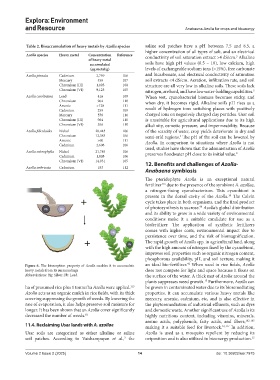
            Figure 6. The biosorption property of Azolla enables it to accumulate   an ideal bio-fertilizer.  When used in rice fields, Azolla
            heavy metals from its surroundings                 does not compete for light and space because it floats on
            Abbreviations: Hg: Silver; Pb: Lead.               the surface of the water. A thick mat of Azolla around the
                                                               plants suppresses weed growth.  Furthermore, Azolla can
                                                                                        15
            ha of presumed rice plus 1 tonne/ha Azolla were applied.    be grown in contaminated water due to its bioremediating
                                                         115
            Azolla acts as an organic mulch in rice fields, with its thick   properties. It can accumulate various heavy metals like
            covering suppressing the growth of weeds. By lowering the   mercury, arsenic, cadmium, etc, and is also effective in
            rate of evaporation, it also helps preserve soil moisture for   the phytoremediation of industrial effluents, such as dyes
            longer. It has been shown that an Azolla cover significantly   and domestic waste. Another significant use of Azolla is its
            decreased the number of weeds. 81                  highly nutritious content, including vitamins, minerals,
                                                               amino acids, polyphenols, fatty acids, and fibers, 102-105
            11.4. Reclaiming Usar lands with A. azollae        making it a suitable feed for livestock. 32,117  In addition,
            Usar soils are categorized as either alkaline or saline   Azolla  is  used  as  a  mosquito  repellent  by  reducing  its
            soil patches. According to Vaishampayan  et al.,  the   oviposition and is also utilized in bioenergy production.
                                                                                                            15
                                                      3
            Volume 2 Issue 2 (2025)                         14                               doi: 10.36922/eer.7975

