


Page 44 - EER-2-3
P. 44
Explora: Environment
            and Resource                                                        Maize–pigeon pea intercropping in Ghana


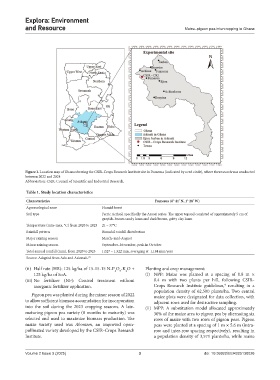
            Figure 1. Location map of Ghana showing the CSIR–Crops Research Institute site in Fumesua (indicated by a red circle), where the research was conducted
            between 2022 and 2024
            Abbreviation: CSIR: Council of Scientific and Industrial Research.
            Table 1. Study location characteristics

            Characteristics                                        Fumesua (6° 41’ N, 1° 28’ W)
            Agroecological zone             Humid forest
            Soil type                       Ferric Acrisol, specifically the Asuasi series. The upper topsoil consisted of approximately 5 cm of
                                            grayish–brown sandy loam and dark brown, gritty clay loam
            Temperature (min–max, °C) from 2020 to 2023  21 – 37°C
            Rainfall pattern                Bimodal rainfall distribution
            Major raining season            March–mid-August
            Minor raining season            September–November, peak in October
            Total annual rainfall (mm), from 2020 to 2023   1,027 – 1,322 mm, averaging at  1,184 mm/year
            Source: Adopted from Adu and Asiamah. 18
            (ii)  Half rate (HR): 125 kg/ha of 15-15-15 N-P O -K O +   Planting and crop management:
                                                  2
                                                    5
                                                      2
               125 kg/ha of SoA.                               (i)  NPP: Maize was planted at a spacing of 0.8  m ×
            (iii) No  fertilizer  (NF):  Control  treatment  without   0.4  m with two plants per hill, following CSIR–
                                                                                                4
               inorganic fertilizer application.                  Crops Research Institute guidelines,  resulting in a
                                                                  population density of  62,500  plants/ha.  Two central
              Pigeon pea was planted during the minor season of 2022   maize plots were designated for data collection, with
            to allow sufficient biomass accumulation for incorporation   adjacent rows used for destructive sampling.
            into the soil during the 2023 cropping seasons. A  late-  (ii)  MPP:  A  substitution  model  allocated  approximately
            maturing pigeon pea variety (8 months to maturity) was   30% of the maize area to pigeon pea by alternating six
            selected and used to maximize biomass production. The   rows of maize with two rows of pigeon peas. Pigeon
            maize variety used was  Abontem, an improved open-    peas were planted at a spacing of 1 m × 5.6 m (intra-
            pollinated variety developed by the CSIR–Crops Research   row and inter-row spacing respectively), resulting in
            Institute.                                            a population density of 3,571 plants/ha, while maize


            Volume 2 Issue 3 (2025)                         3                           doi: 10.36922/EER025130026

